

Caravaggio's The Cardsharps: Cheating, Cards, and the Birth of Poker Drama
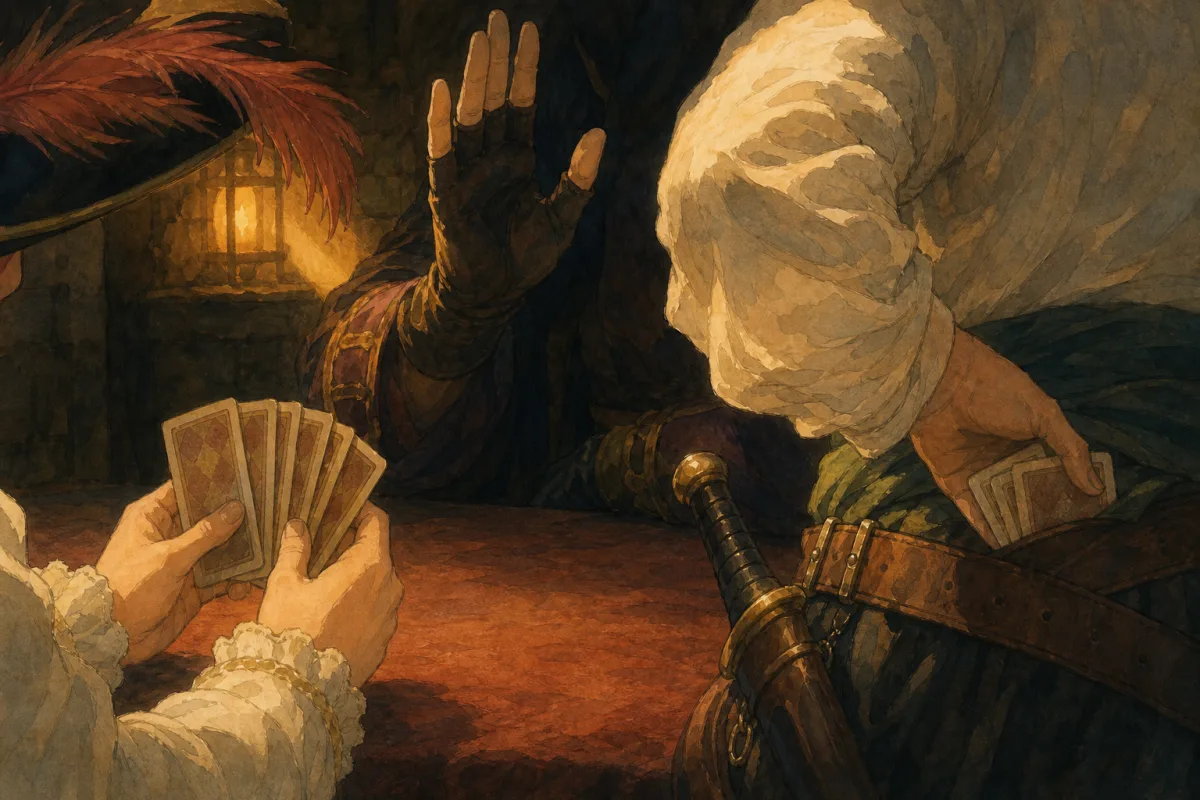
Painted around 1594, Caravaggio's The Cardsharps captures a rich young dupe losing at primero - a card game that anticipated poker - while an older cheat signals his accomplice and a hidden card waits in a belt. It launched Caravaggio's career and fixed cheating as art's favourite card-table story.
This is a story about painted drama, not chip manufacturing - but every host who cares about fair play inherits the problem Caravaggio made beautiful.
Caravaggio Cardsharps: what people usually mean
Most readers landing on caravaggio cardsharps want one of four things before they read art-history depth:
| Question | Short answer |
|---|---|
| Who painted The Cardsharps? | Michelangelo Merisi da Caravaggio (circa 1594) |
| Where is the painting now? | Kimbell Art Museum, Fort Worth, Texas |
| What game are they playing? | Primero - a 16th-century bluffing card game, not modern Texas hold'em |
| What is happening in the scene? | A young mark loses while two cheats signal and pal a hidden card |
Italian title: I Bari ("The Cheats"). English museum labels usually say The Cardsharps. Do not confuse it with Georges de La Tour's candlelit Cheat with the Ace of Clubs - a different artist, different century (La Tour guide).
The comic American descendant of this cheat tableau is Coolidge's Dogs Playing Poker - same collusion joke, 400 years later, with spaniels instead of Roman street sharpers.
Rome, 1594: a painter leaves the workshop
Caravaggio arrived in Rome from Milan in the early 1590s, trained in the north-Italian tradition of light grounds and sharp observation. By January 1594 he had left the workshop of Giuseppe Cesari (Cavaliere d'Arpino) to paint small genre scenes for the open market - street life, fortune-tellers, and card cheats.
The Cardsharps (Italian: I Bari) sold through the dealer Costantino, with help from the painter Prospero Orsi. It was sized for private collectors who liked moral intrigue without altar-piece grandeur. Within months, Cardinal Francesco Maria del Monte purchased it - and Caravaggio gained rooms in Palazzo Madama, a stipend, and access to patrons who would commission his revolutionary religious works.
The Kimbell Art Museum, which owns the widely accepted original, describes the painting as Caravaggio's breakthrough into "the elite stratum of Roman ecclesiastical society." A single card scene bought him years of work.
For what players put on tables centuries later - once uniform chips replaced whispered collusion - see our history of poker chips.
Reading the cheat: primero and the hidden card
Caravaggio stages three figures and one table - no chips, no cage, no dealer in a waistcoat. The drama is entirely information asymmetry.
| Figure | Role | Tell |
|---|---|---|
| Young mark (left) | Dupe - well dressed, absorbed in his hand | Eyes down - he trusts the cards he was dealt |
| Older cheat (centre) | Signaller - gloved hand raised | Fingertips exposed through slashed gloves to feel marked backs |
| Young accomplice (right) | Mechanic - feathered hat, dagger at hip | Reaches behind his back for a card hidden in his belt |
The game is primero: a bluffing and betting game using a shortened deck. Analysts of the visible cards note a telling detail - an eight of hearts concealed with a six of clubs. In primero, 8s were removed from play. Showing an eight would be impossible in a fair hand - Caravaggio winks at the viewer: this game is already stolen.
That single prop does more work than a paragraph of sermonising. It is the 1600s equivalent of catching a palmed chip on a security camera - except the camera is you, standing where only the cheat should stand.
Why The Cardsharps was revolutionary
Before Caravaggio, card cheats in European painting were often caricatures - vice as comedy. Caravaggio paints psychology:
- Gesture instead of mime - the signal hand is unfinished in X-rays, revised live on canvas
- Class markers - silk, plumes, and a dagger show the accomplice as street professional, not grotesque
- Viewer complicity - you see the cheat; the mark does not. Artnet has noted the mark as a metaphor for anyone fooled by illusion - including people looking at realistic painting
The theme spawned imitators - Georges de La Tour's candlelit Cheat with the Ace of Clubs and others explored candlelit gambling - but Caravaggio's Roman street credibility set the tone: dangerous, plausible, now.
Compare the emotional register to Cézanne's silent Card Players three centuries later - no cheat, no story, pure form (our Cézanne guide) - or to Coolidge's comic dogs (Dogs Playing Poker). Caravaggio owns suspense.
Cheating without chips - and the modern table
The Cardsharps predates factory-made poker chips by nearly three centuries. Stakes in primero were coins, jewels, or IOUs - anything countable. The collusion Caravaggio shows did not need denominations on clay; it needed marked paper and trusted glances.
Modern rooms answer different threats:
| Era | Typical cheat | Typical counter |
|---|---|---|
| 1594 (Caravaggio) | Marked cards, second deals, signals | Sharp eyes, dagger politics |
| 1880s saloon | Short-weight tokens, loaded dice | Standardised clay chips, house dealers |
| Today's casino | Past-posting, counterfeit chips | RFID, UV, surveillance - see chip security features |
| Home game | Collusion, angle shooting | Clear rules, visible stacks, impartial dealer |
Custom chips will not stop two friends signalling - A Friend in Need in Coolidge's dog series is the comic descendant of Caravaggio's I Bari. They do stop "which chip is worth what?" arguments and accidental string betting - reasons serious hosts order printed denominations on clay label inlays or ceramic faces.
Copies, courts, and the Kimbell canvas
Caravaggio's popularity meant copies - including a version that triggered a 2015 High Court dispute in England after Sotheby's sold it as studio copy rather than autograph work. The Kimbell painting remains the reference for scholars and for exhibitions on loan worldwide.
If you see The Cardsharps in person, notice pentimenti - the cheat's hand, cards, and striped doublet shifted during painting. Caravaggio composed directly on canvas, not from polished drawings. The table feels contemporary because it was painted like a crime in progress, not a history lesson.
Fair play at home - lessons from a cheat painting
Caravaggio is not a hosting manual. Still, the painting encodes three rules every decent game follows:
- Protect the mark - rotate dealer, explain house rules, do not invite strangers into uncapped side games
- Control the deck - new seals, cut card, no marked cards - obvious, but the painting exists because people skip this
- Make stakes visible - colour-coded chips beat cash in pockets; players see pot size and stack depth without sleight of hand
When you upgrade from ambiguous plastic to a custom set with clear denominations, you are solving the 1594 problem in modern materials: trust what is on the table.
Get an instant quote when you are ready - clay from 500 chips, ceramic from 500, worldwide delivery.
What remains
The Cardsharps is not poker - it is primero, Roman street crime, and Baroque lighting. But every player who has watched an obvious tell land on an oblivious opponent recognises the scene. Caravaggio did not invent cheating. He invented the picture of cheating - and made the viewer complicit.
Four hundred years later, the honest version of the same table is still worth building: good light, fair cards, weight in the hand, and friends who would never pass an ace under the felt - even if Coolidge's dogs would.