

Georges de La Tour's Cheat with the Ace of Clubs: Candlelit Poker Faces
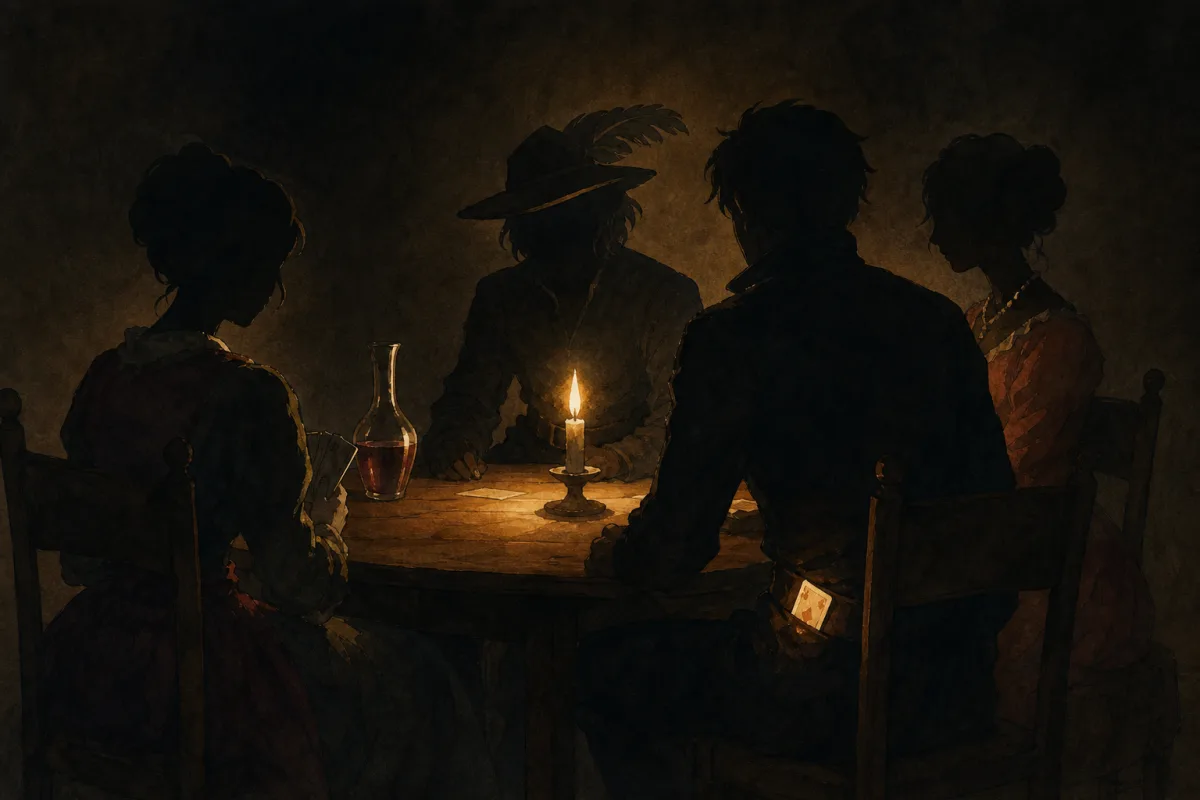
Before chips and casinos, Georges de La Tour painted card cheats by candlelight - wine, sidelong glances, and an ace tucked behind a belt. The Kimbell masterpiece is poker-face drama in oil.
For how tokens later replaced coins and paper at such tables, see our history of poker chips.
De La Tour and the candlelit card table
Georges de La Tour (1593–1652) spent most of his life in Lorraine, far from Paris, painting merchants, saints, and gamblers under single-flame light. He fell into obscurity after his death and was rediscovered in the twentieth century - which is why his name now sits beside Caravaggio and Cézanne in conversations about cards in art.
The Cheat with the Ace of Clubs is among his greatest works: oil on canvas, roughly 98 × 156 cm, acquired by the Kimbell Art Museum in 1981. The museum's catalogue ties the scene to moral warnings about wine, women, and gambling, while also noting debts to Caravaggio's Cardsharps - also in the Kimbell collection - and to prodigal-son imagery from biblical art.
What poker players recognise is simpler: four people, one pot, asymmetric information. The cheat tips his cards toward us; the viewer becomes complicit. That is the same social geometry as a home game where one regular always knows when the recreational is strong - even when the cards say otherwise.
Reading the scene: ace, wine, and sidelong glances
| Figure | Role in the drama | What players see |
|---|---|---|
| Young man (left) | The mark - absorbed in his hand | A player who has not yet looked left |
| Maidservant (centre) | Signals the cheat | The friend who telegraphs too much |
| Courtesan (right) | Distracts with wine | Table talk that covers a move |
| Cheat (far right) | Hides ace of clubs at his belt | The mechanic - hand below sight line |
De La Tour's costumes are sumptuous - lace, brocade, jewellery - but the psychology is plain. Gazes do not meet when they should. The candle flattens the background so nothing competes with hands and faces. Compare Caravaggio's daylight street boys in our Cardsharps guide: same crime, different lighting contract.
Art historians often identify the game as primero - a 16th-century European favourite built from four suits, not community cards and river souls. The Musée du Vin notes that de La Tour later painted The Cheat with the Ace of Diamonds (Louvre, c. 1636–38) as a variation - different clothes, different hidden suit, same conspiracy.
From hidden aces to hidden tells
Seventeenth-century card play was condemned by church and crown yet flourished in salons and taverns - much like underground poker before legalization. De La Tour does not celebrate the cheat; he slows time so you notice the mechanism.
That pause is what Cézanne borrowed two centuries later - men at a table with no money visible, only concentration. We traced that line in Cézanne's Card Players and in David Hockney's 2015 homage. De La Tour supplies the plot; Cézanne supplies the monument; Hockney supplies the friends in a studio. For the comic American cheat - ace under a paw - see Coolidge's Dogs Playing Poker.
Modern hosts recreate a fraction of this seriousness when they upgrade from plastic to custom casino-grade chips - weight and artwork signal that the table matters. That is manufacturing, not morality painting - start at how custom poker chips are made if you are curious about the craft side.
The Kimbell pair: Caravaggio and de La Tour under one roof
Fort Worth is an unlikely pilgrimage for card-table art, yet the Kimbell holds both:
| Painting | Artist | Date | Drama |
|---|---|---|---|
| The Cardsharps | Caravaggio | c. 1594 | Street hustle, marked cards, finger signals |
| The Cheat with the Ace of Clubs | Georges de La Tour | c. 1630–34 | Candlelit salon, hidden ace, wine distraction |
Standing between them is a lesson in how poker culture inherits images: daylight hustle becomes nocturnal psychology; Rome becomes Lorraine; boys become fashion plates - but the scam structure persists.
Why this painting still matters at the home-game table
Nobody deals primero in a garage in 2026. Still, de La Tour nails habits that survive every format:
- Information asymmetry - someone at the table knows more than someone else
- Distraction as weapon - wine then, phone scroll now
- The tell in the body - belt, wrist, glance - not the board
- Complicity - once you see the ace, you cannot unsee it
Fair home games fix this with clear rules, visible shuffles, and chips that feel serious enough to respect. Cheap plastic can encourage sloppy handling; 10g custom clay or ceramic does not stop cheats - but it signals that the host runs a proper room.
If you are building that room, get an instant quote when you are ready - this article is about painting, not checkout flows.
Mistakes when borrowing art history for poker night
| Mistake | Why it misfires | Better angle |
|---|---|---|
| Calling the game poker in a strict sense | Period play was primero / similar | Say card-table culture or poker face |
| Treating the cheat as a hero | The painting is a morality warning | Use it to talk about game integrity |
| Ignoring the Louvre variant | Two compositions, two hidden suits | Mention Ace of Diamonds for completeness |
| Forgetting no chips on canvas | Stakes are social, not denominated | Link forward to chip history |
Georges de La Tour's candlelit cheat is a masterclass in the poker face before poker - hidden aces, traded glances, and a player who has not yet earned the right to be angry. Hang a print in the game room if you like; run an honest shuffle either way.