

Poker Chip Weight Comparison: 8g, 10g, 11.5g and 14g Explained
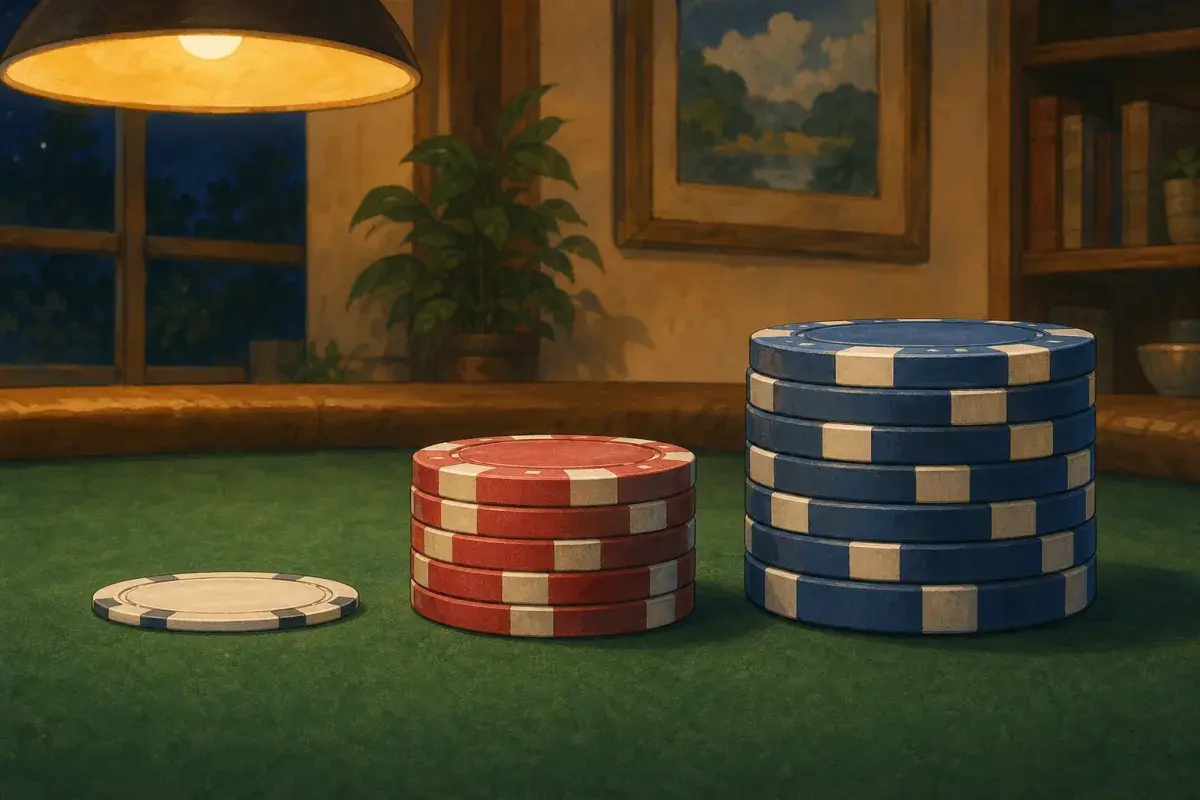
You will see poker chip weights from 4g party tokens to 15g novelty sets, all marketed as “casino” or “professional.” The number on the box is real, but it is easy to misread: a 14g sticker does not tell you whether you are buying live-room equipment or a dense home-game composite.
This guide compares the weights you actually encounter when shopping in the UK — 8g through 14g — how manufacturers achieve each weight, and which range makes sense for home games, clubs, and anyone moving up to custom poker chips.
Why Poker Chip Weight Matters at the Table
Weight affects more than bragging rights:
| What players notice | Why weight plays a role |
|---|---|
| Stack stability | Light chips (often under 8g) tip when players build pots |
| Hand feel | Dense chips sit in the palm; you can count stacks by touch |
| Shuffle and slide | Consistent mass helps chips move cleanly across felt |
| Session comfort | Very heavy chips fatigue dealers and hosts in long tournaments |
| Perceived quality | Guests equate weight with seriousness — even when the construction is basic |
None of this means you must chase the highest gram number. It means you should know what the grams represent — material density, metal slug, or both.
Poker Chip Weight Comparison Table
Use this as a quick reference when comparing listings:
| Weight | Typical construction | Where you see it | Feel | Best for |
|---|---|---|---|---|
| 4g–8g | Thin injection plastic | Budget retail sets, party packs | Light, slippery, hollow sound | Teaching, travel, very casual play |
| 8g–10g | Compression clay or ceramic composite (no metal insert) | Casinos, WSOP-style rooms, casino-grade custom | Balanced, authentic, stacks well | Weekly home games, clubs, tournaments |
| 11.5g | Injection composite + metal insert | Popular “casino dice” home sets, fast UK decal custom | Substantial, mid-heavy | Events, first upgrade from thin plastic |
| 13.5g–14g | Denser composite + larger metal insert | “Professional” retail sets, crown-mould decal custom | Very heavy, dramatic in hand | Hosts who want maximum heft; shorter sessions |
| 15g+ | Oversized or plaque formats | Plaques, novelty chips | Not standard 39mm poker chip | Display denominations, not main action chips |
Diameter note: standard poker chips are 39mm (some home composites are 40mm). Weight and diameter together change how a stack looks — a 14g 40mm chip towers differently from a 10g 39mm casino chip.
How Manufacturers Hit Different Weights
Understanding how a chip reaches 10g or 14g prevents expensive mismatches.
Casino-grade 10g (material weight)
Compression-moulded clay composite and ceramic composite chips used in professional card rooms get their mass from the chip body itself — no metal disc in the centre. Poker Foundry’s clay and ceramic lines are made to 10g ± 0.2g with 39mm diameter, matching the spec serious players expect.
Artwork differs — clay uses a printed label inlay; ceramic uses direct-to-chip printing with no separate label — but weight is identical on both lines.
11.5g home composites (insert-assisted)
The 11.5 gram chip became the default home-game weight because manufacturers moulded ABS or clay-composite blanks with a metal slug inside. The insert adds grams without changing the moulding process much. These chips are affordable and familiar, but they are not what most live poker rooms stock.
14g “heavy clay” sets (more insert, same tier)
14g marketing often implies luxury. In practice, many 14g chips are still injection-moulded composites with a larger metal insert — not compression-moulded casino clay. They can feel fantastic for an hour and heavy after three. If your goal is “what casinos use,” 10g is the target — not 14g.
Lightweight plastic (under 10g)
Thin plastic sets — common on marketplaces at £20–£50 for 300 chips — rarely list weight prominently. They are often 4g–8g. Fine for learning; frustrating for weekly hosts. See upgrade from plastic to custom when you outgrow them.
10g: The Casino Standard (and Why It Wins for Regular Play)
Live poker rooms standardised on roughly 10 grams for practical reasons:
- Dealers handle thousands of chips per shift — lighter casino chips reduce fatigue.
- Players get authentic heft without wrist strain over long tournaments.
- Tolerances — quality manufacturers hold ±0.2g so every chip in a set feels the same.
When you order custom casino-grade chips, you are usually buying into this spec: dense composite, tight diameter control, artwork that survives shuffles — not simply “heavier than Amazon.”
Clay vs ceramic at 10g: same weight, different character. Clay’s bevelled edge and textured surface give a deeper click on the felt; ceramic’s flat edge and smoother face feel modern and slide cleanly. Durability ratings differ (25,000+ impact cycles clay inlay vs 50,000+ ceramic direct print), but neither line wins on grams alone. The full material comparison is in our clay vs ceramic guide.
11.5g and 14g: When Heavier Chips Make Sense
Heavier home-market chips are not wrong — they solve different problems:
| Scenario | Heavier composite (11.5g–14g) | Casino-grade 10g custom |
|---|---|---|
| Need chips in under two weeks | Often available as UK-printed decals | Factory lead time ~10 weeks post sign-off (rush ~4 weeks) |
| One-off branded event | Cost-effective at volume | Overkill unless you want keepsake quality |
| Host wants maximum heft in hand | 14g feels impressive immediately | 10g feels “real” to players who have been in card rooms |
| Weekly club for years | Decals wear; inserts ≠ casino build | Inlay or direct print built for repeat shuffling |
UK buyers comparing listings should read custom poker chips UK suppliers compared — it separates Tier 1 decal blanks (often 11.5g–14g) from Tier 2 10g manufactured-to-order chips.
How to Choose the Right Weight for Your Game
Work through these in order:
- How often do you play? Monthly or more → prioritise build quality at 10g, not maximum grams.
- Have your guests played in casinos or clubs? They will expect ~10g feel — 14g can feel oddly heavy.
- What is your deadline? Fast UK decal custom vs factory custom poker chips are different purchases.
- Material next, not instead: once you are at 10g, choose clay for inlay detail and casino sound, or ceramic for no separate label and a 300-chip minimum.
- Quote your real quantity — unit price tiers change the maths more than an extra 4g of insert. Use the instant quote with your player count and denominations.
For set size and denominations after weight, see how many poker chips for a home game.
Common Mistakes When Shopping by Weight
| Mistake | Why it hurts | Fix |
|---|---|---|
| Assuming 14g = casino quality | Casinos use ~10g; 14g often means bigger metal insert | Read construction, not just grams |
| Ignoring diameter | 40mm vs 39mm changes stack height and case fit | Check 39mm for standard poker layouts |
| Comparing weights across tiers | 10g inlay chip vs 14g decal blank is not apples to apples | Use supplier tier tables |
| Buying heavy sets for long tournaments | Hand fatigue shows up after hour three | Sample stacks before bulk ordering |
| Skipping denominations | Weight will not fix “which green is £25?” | Print values when you go custom |
Custom 10g Chips at Poker Foundry
If your research points to casino-standard weight rather than the heaviest box on the shelf, both Poker Foundry lines deliver 10g ± 0.2g:
- Custom clay poker chips — bevelled edge, printed inlay, 500-chip minimum, ideal for casino feel and fine artwork.
- Custom ceramic poker chips — flat edge, direct-to-chip print, 300-chip minimum, 50,000+ impact rating.
Pricing is quantity-based — ceramic from £0.73/chip at minimum order, clay from £0.79/chip — with an itemised breakdown in under a minute.
Next Steps
The short answer, again: pick 10g if you want what professional card rooms use; consider 11.5g–14g only when speed, budget, or sheer heft matters more than long-term casino-grade construction.
Ready to price a 10g set with your artwork and chip count? Get an instant quote — no sales call, full itemisation, UK-based with worldwide delivery.