

Upgrade from Plastic to Custom Poker Chips: When It Is Worth It
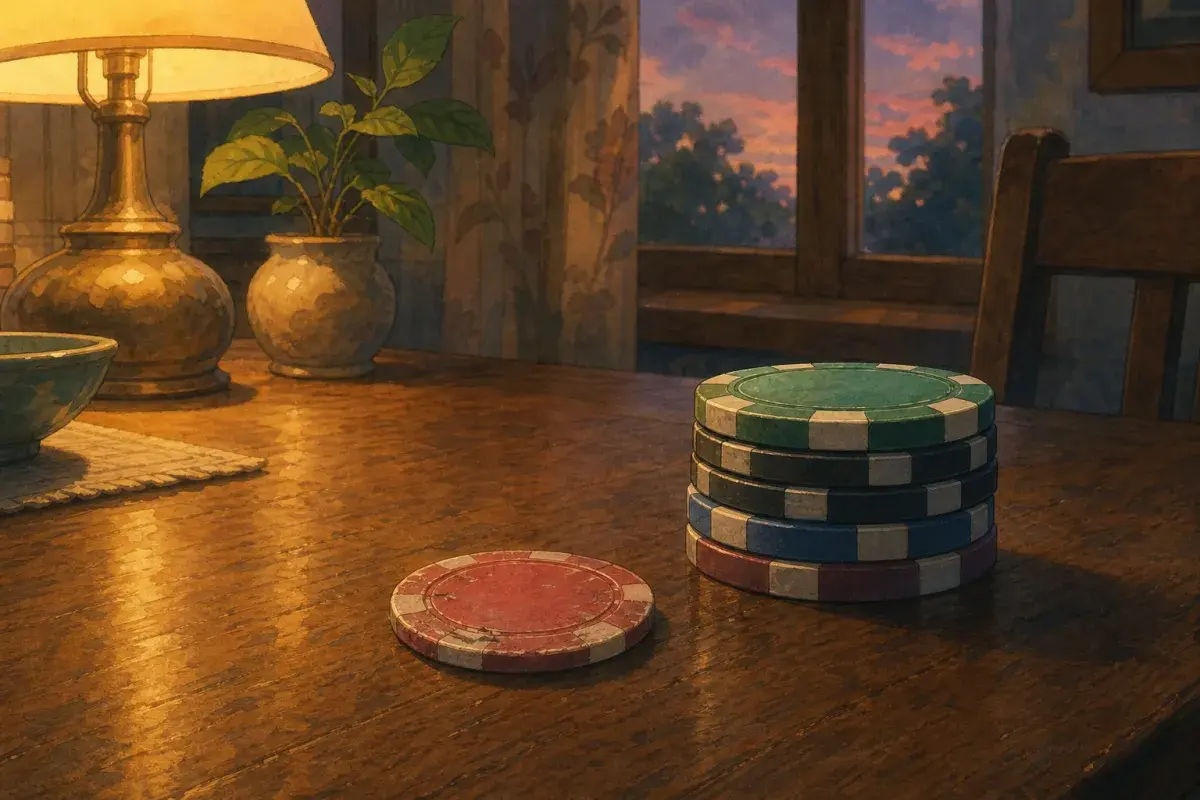
You bought a chip set online — probably lightweight plastic, maybe a metal case, denominations you did not choose. It was perfect for learning the game. Six months later you are hosting every Friday, the stickers are peeling, and someone keeps asking which colour is the £25.
That is the classic plastic-to-custom upgrade moment. This guide is for home game hosts and club organisers who have outgrown retail sets and want to know what actually improves when you move up, what it costs in the UK, and whether you should skip the middle tier and go straight to casino-grade custom chips.
Signs You Have Outgrown a Plastic Chip Set
Plastic and thin composite chips are not "bad" — they are built for occasional play. The frustration usually shows up in the same places:
| Symptom | What is going wrong |
|---|---|
| Stacks tip over | Light weight (often 4–8g) and slippery surfaces |
| Stickers fade or peel | Centre labels are not bonded into the chip |
| Guests argue about values | Generic colour coding does not match your stakes |
| Chips sound hollow | Thin plastic lacks the dense "click" players expect |
| You are buying a second set | Retail 300/500 packs rarely match how your game actually runs |
If two or more of those sound familiar and you host at least monthly, upgrading is less about vanity and more about running smoother games.
The Chip Ladder: Plastic, ABS, and Casino-Grade Custom
For the full three-rung market map — mass-market sets, Poker Foundry sweet spot, and collector Paulson / CPC tier — with lifetime cost per game night, read casino-grade poker chips: the value sweet spot.
Not every upgrade path is equal. Think of four tiers:
1. Lightweight plastic (most Amazon / high-street sets)
Injection-moulded, often under 10g, smooth or lightly textured. Cheap, portable, fine for camping or teaching kids. Poor stackability and short artwork life.
2. Heavy plastic / ABS composite (many "14g" retail sets)
A step up: metal slug or denser plastic, sometimes 11–14g. Better weight than thin plastic, but still often sticker inlays and mass-produced designs you cannot change. Common "middle ground" that still disappoints regular hosts.
3. Custom clay composite (casino-style)
10g standard, bevelled edge, printed label inlay, textured feel. The material type used in most live poker rooms. best for authentic feel and clubs. Details: custom clay chips.
4. Custom ceramic composite
Also 10g, flat edge, direct-to-chip printing with no paper inlay label. 50,000+ impact cycles, 300-chip minimum. Details: custom ceramic chips.
The jump from tier 1 or 2 to tier 3 or 4 is where night-and-day difference lives — weight, sound, stack height, and artwork that survives shuffles.
What Actually Changes at the Table
Players notice upgrades before they can name why:
- Handling — 10g chips sit in the hand; pots are easier to count and slide across felt.
- Stacking — denser material and tighter tolerances mean towers stay upright during deals.
- Sound — Clay especially gives the familiar casino click; plastic sounds flat by comparison.
- Clarity — Custom denominations on each colour end the "is green £25 or £100?" debate.
- Pride — A branded home game or club set signals you are not playing with toy chips anymore.
None of that requires your guests to be pros. Casual players feel the difference in the first orbit.
Cost: Plastic vs Custom (Honest UK Numbers)
Retail plastic sets look like the budget winner on paper. Custom chips win on cost per year if you play often.
| Typical plastic / retail set | Custom casino-grade set (500 chips) | |
|---|---|---|
| Upfront | ~£20–£80 | ~£400–£700+ (material, shipping) |
| Per chip (guide) | Bundled — often £0.05–£0.15 effective | Ceramic from £0.73/chip, clay from £0.79/chip at entry qty |
| Artwork | Fixed factory design | Your logo, colours, denominations |
| Lifespan | Stickers wear; chips crack | Rated 25,000+ (clay) / 50,000+ (ceramic) impact cycles |
| Reorder | Buy another generic set | Match existing mould / artwork |
Design: full design service is currently free (normally £100) — worth factoring when comparing UK suppliers who charge per artwork revision.
Do not quote a single total without your quantity — a 300-chip ceramic order and a 1,000-chip clay club order land in different places. Run both lines on the instant quote tool; it is itemised and commitment-free.
When Plastic Is Still Fine (and When It Is Not)
Stick with plastic if:
- You play once or twice a year with mixed beginners
- You need something ultra-portable for travel
- Budget is genuinely fixed under ~£50 total
Upgrade to custom if:
- You host weekly or fortnightly
- You run a poker club or charity tournament and want consistent branding
- You already plan to replace a fading retail set
- You care about denominations matching your stakes (see our home game chip count guide)
The expensive mistake is buying a "nicer" 14g ABS set, then custom six months later. If you know custom is the destination, skip the interim purchase.
Common Upgrade Mistakes
| Mistake | Why it hurts | Fix |
|---|---|---|
| Buying 14g ABS as a "step up" | Still decal-based; you may reorder custom soon | Go straight to 10g custom if budget allows |
| Ordering the week before game night | Custom needs ~10 weeks post label sign-off | Start three months ahead |
| Guessing denominations | Wrong values sit unused | Match stakes — see home game guide |
| Mixing old plastic with new custom on one table | Confusion over values and feel | Use plastic as spares only, not main inventory |
Planning Your Upgrade: Count, Denominations, Material
Before you order, lock three decisions — the same ones you would make for any custom set:
1. How many chips?
Plan 50–75 chips per player in play, plus 20–30% bank for rebuys. 500 total suits most 6–9 player home games; 750–1,000 for larger tables or tournaments.
2. Which denominations?
Cash games: 3–5 values spaced 4×–5× apart (e.g. £1 / £5 / £25 / £100). Tournaments: non-cash values like 25 / 100 / 500 — about 50 chips per player in the starting stack.
3. Clay or ceramic?
- Clay — classic feel, bevelled edge, printed inlay for the finest artwork detail.
- Ceramic — no separate label, higher durability rating, 300-chip MOQ;
Still torn? Read how to choose custom poker chips or the feel comparison in our clay vs ceramic guide.
Timeline: Do Not Upgrade the Week Before the Game
Custom chips are not next-day Amazon. After you approve artwork:
- Standard lead time: ~10 weeks post label sign-off
- Rush option: ~4 weeks (+£120)
If your upgrade is tied to a launch night, anniversary game, or club reopening, start the quote and design at least three months ahead. Rush exists, but design back-and-forth still needs calendar space. Full stage breakdown: how long custom poker chips take.
Ordering from Poker Foundry: What to Expect
We built Poker Foundry for players who were tired of guessing prices and reordering mismatched chips. If you are upgrading from plastic:
- Get an instant quote — enter quantity, clay or ceramic, UK or worldwide delivery
- Share artwork — logo, colours, denominations; design help is included during the current promotion
- Approve a digital proof — especially important when replacing a set your group already knows
- Production — standard or rush, with clear lead times above
Browse real customer sets if you want proof that home games and clubs actually make the jump from retail plastic to custom — the difference is visible in the stack photos alone.
Bottom Line
Plastic chips do a job: they get you started. Weekly hosts, clubs, and anyone ordering a second retail set are usually ready for 10g custom clay or ceramic — better feel, printed denominations, and a set that still looks right in year three.
You do not need the biggest order on day one. You do need the right count, the right values on each chip, and a material choice that matches how your table plays.
After the upgrade lands, a few minutes of chip care after each session keeps casino-grade sets looking and feeling new — especially if you are moving from low-maintenance plastic.
Ready to price the upgrade? Get an instant quote — itemised, no sales call, under a minute.