

Casino-Grade Poker Chips: The Value Sweet Spot Between Amazon and Paulson
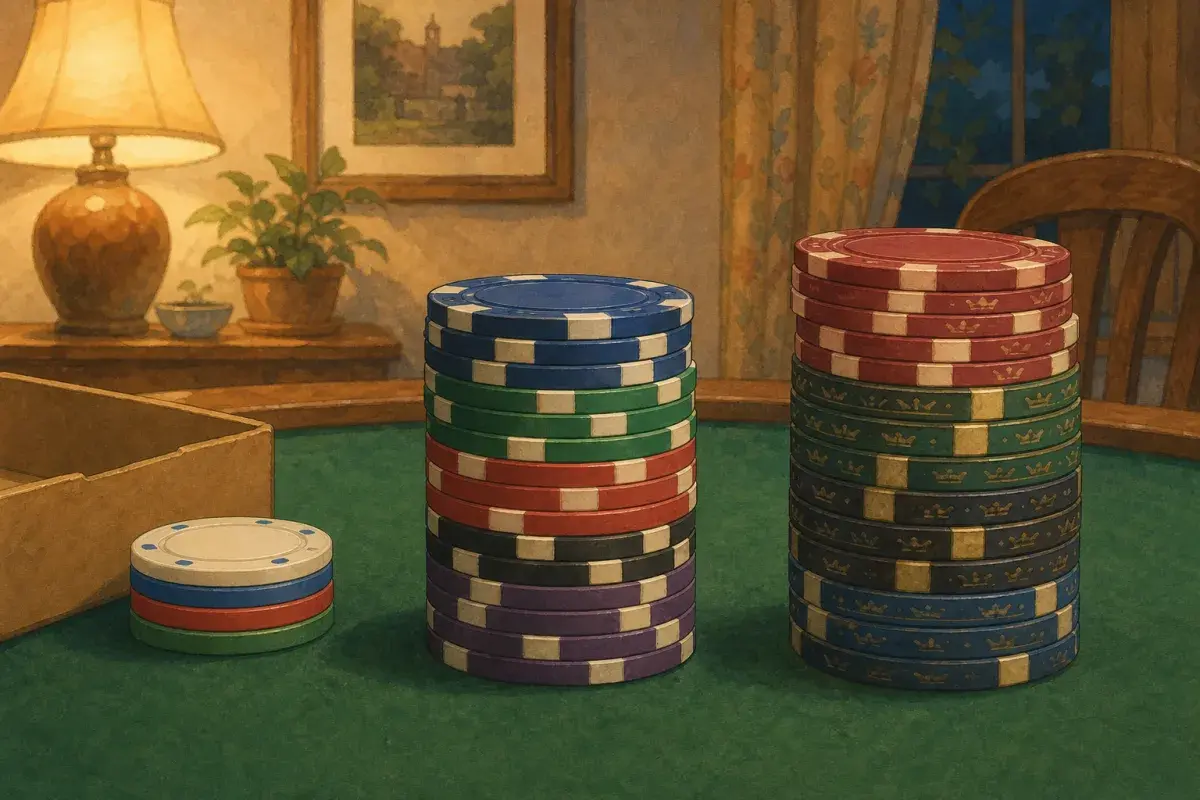
If you have ever thought “I do not want toy chips, but I am not spending thousands on vintage clay,” you are exactly who this model is for. This guide names the three tiers clearly, quantifies lifetime value in plain numbers, and shows why casino-grade custom is the obvious move once you are past Amazon — with links to upgrade from plastic, UK supplier types, and how much a poker set costs for deeper dives.
The three-rung market model
| Rung | What it is | Typical buyer | Feel / durability | Price signal (UK) | Lead time |
|---|---|---|---|---|---|
| A — Mass-market | Thin plastic or 14g ABS with factory stickers/decals | First-time hosts, gifts, travel sets | Light, hollow, stickers peel | £15–£150 per boxed set | Days (retail) |
| B — Serious-game sweet spot | Poker Foundry: 10g custom clay inlay or ceramic direct print, your denominations | Weekly home games, clubs, small rooms, branded events | Casino weight, stack, sound; 25k+ / 50k+ impact ratings | from £0.73/chip (ceramic) · from £0.79/chip (clay) | ~10 weeks post sign-off standard ( 4 rush) post sign-off |
| C — Collector / ultra-premium | Paulson, CPC, vintage casino inventory, bespoke ultra-high-end | Collectors, memorabilia buyers, some high-stakes rooms | Exceptional — often used sets with heritage appeal | Often £1–£3+ per chip and up on secondary markets; full sets well into four figures | Variable — scarcity, auctions, long bespoke queues |
Simple decision rule: If you are past Amazon but not dropping Paulson money, rung B is where the market actually serves you. Poker Foundry is built to own that lane.
Who lives in the middle (and why it matters)
The middle of the market is larger than the hype at either extreme:
- Home game hosts who play monthly or weekly and want guests to notice the upgrade on the first shuffle
- Poker clubs that need consistent denominations, reorders, and branding — not a new generic set every year
- Small card rooms and pub poker that want 10g equipment without collector procurement
- Corporate and branded nights that need custom logos and a premium table feel on a planned budget, not a six-month collector hunt
These buyers care about feel, sound, durability, and aesthetics together — not chip collecting. They need a supplier that closes the gap between toy-store sets and ultra-premium customs. That is the business case for the sweet spot, and it is why we publish transparent instant quotes instead of opaque “call for pricing” sales lines.
Rung A: mass-market sets (what you are leaving behind)
Tier A is what most people meet first:
- Lightweight plastic (often under 10g) in a tin or cheap case
- Sticker or shallow decal artwork that fades with cleaning and shuffles
- Generic colour coding that does not match your stakes
- Marketing words like “professional” or “casino” on the box without 10g compression-moulded construction
There is nothing wrong with tier A for occasional play. The mistake is staying on tier A while hosting serious, repeat games — or buying a heavier 14g retail set and expecting it to behave like rung B. Our upgrade guide covers when to leave tier A entirely.
Rung B: Poker Foundry — the serious-game sweet spot
Poker Foundry sits deliberately in rung B:
| What “sweet spot” means | How we deliver it |
|---|---|
| Casino weight | 10g ±0.2g on both clay and ceramic — the spec live rooms use, not novelty 14g slugs |
| Major feel & sound upgrade | Clay bevelled edge and inlay; ceramic flat edge direct print — dense stacks that click instead of clatter |
| Durability | 25,000+ impact cycles (clay) · 50,000+ (ceramic); artwork applied for sustained play, not party-night stickers |
| Aesthetics you control | Your logo, colours, denominations — design support included on current orders |
| Transparent economics | Instant quote with itemised lines; volume tiers as quantity grows |
| Reorder consistency | Top-ups matched to signed-off proof and retained artwork — colour matching on reorders |
| Realistic lead times | ~10 weeks post label sign-off — long enough for factory quality, not collector-market uncertainty |
You are not buying a mythic vintage chip. You are buying factory-new, casino-spec equipment sized for your game — the same upgrade path clubs and home hosts use when plastic stops being fun.
Rung C: Paulson, CPC, and collector-grade (when it is overkill)
Paulson and Casino Poker Chips (CPC) — plus vintage casino pulls and ultra-bespoke ultra-premium lines — are rung C:
- Outstanding tactile quality and heritage appeal, especially for collectors
- Secondary-market pricing that scales with rarity, condition, and denomination mix
- Impractical lead times or sourcing for a host who just wants a reliable Friday game next quarter
- Overkill when your job is weekly cash with printed £1 / £5 / £25 — not building a display case
We respect rung C for what it is. Most hosts in our world do not need it — they need rung B done properly once, with proof-led production and clear UK support.
Lifetime value: cost per game night (worked example)
Headline sticker price lies. Cost per game night tells the truth for regular hosts.
Assumptions: one table, 24 game nights per year (twice a month), 8-year horizon.
| Path | Upfront + replacements | Total 8-year spend | Game nights | Cost per night |
|---|---|---|---|---|
| A — Retail plastic | £60 set × 3 replacements (wear/fade) | ~£180 | 192 | ~£0.94 |
| A — “Nicer” 14g retail | £120 set × 2 replacements | ~£240 | 192 | ~£1.25 |
| B — Custom 750 ceramic (UK) | ~£454 once (volume guide) | ~£454 | 192 | ~£2.37 |
| B — Custom 500 clay (UK) | ~£395 once | ~£395 | 192 | ~£2.06 |
| C — Collector-style set | ~£1,500+ illustrative full set | ~£1,500+ | 192 | ~£7.80+ |
Rung B costs more per night than tier A on paper — because tier A numbers hide replacements, weaker play experience, and the second set you buy when guests complain. Rung B buys one specification you are proud to photograph for year eight.
Your numbers: open the instant quote tool, enter your player count and material, and divide the total by how many nights you will actually host. If you play once a year, tier A may still win. If you play monthly, tier B usually does.
What upgrades when you move from A → B
| Dimension | Rung A (mass-market) | Rung B (Poker Foundry) | Rung C (collector) |
|---|---|---|---|
| Feel in hand | Light, slippery | 10g casino density | Premium (often vintage) |
| Stacking | Tips easily | Stable columns | Excellent |
| Sound | Hollow plastic | Clay click / ceramic snap | Often iconic |
| Artwork life | Stickers peel | Inlay or direct print for rated cycles | Varies; collectibility focus |
| Denominations | Generic | Yours, printed | Often standard casino values |
| Price clarity | Retail shelf | Instant itemised quote | Opaque / auction / bespoke |
| Fit for weekly host | Poor long-term | Designed for it | Usually excessive |
That table is the “closes the gap” story in one view: major upgrade in the things players feel, without CPC-level cost or lead times.
“Past Amazon, not Paulson money” — choosing B without a detour
The expensive detour is stopping at rung A2 — a 14g decal set that marketing calls casino-grade:
- You outgrow thin plastic.
- You buy a heavier retail set thinking it is the middle path.
- Stickers still fade; denominations still are not yours.
- You order real custom six months later and pay twice.
If rung B is the destination, skip the interim when budget allows. Match tier to use frequency using UK supplier types — fast decal tiers for one-off promos, Tier 2 casino manufacturing for weekly play.
Clay or ceramic within B?
- Clay — casino feel, printed inlay for fine detail
- Ceramic — no separate label, 300-chip MOQ, 50,000+ cycles
Same sweet spot; different construction. How to choose custom poker chips walks the decision.
Common mistakes in the middle lane
| Mistake | Why it hurts | Fix |
|---|---|---|
| Comparing PF to Paulson on prestige | Different purchase — collector vs host | Decide if you are playing or collecting |
| Comparing PF to Amazon on upfront price only | Ignores replacements and experience | Model cost per game night |
| Expecting next-day delivery | Rung B is made to order | Plan 3 months; see lead times |
| Buying 14g retail as “enough” | Still tier A artwork economics | Go 10g custom when you host weekly |
| Skipping the quote tool | You guess; we itemise | /quote in under a minute |
The obvious move in the middle
The mental model we want every serious host to have:
If you are past Amazon, but not dropping Paulson money, Poker Foundry is the obvious move.
That is not hype — it is segmentation. Tier A cannot give you your denominations and 10g factory quality. Tier C cannot give you transparent pricing and sensible MOQs for a 750-chip home game. Tier B exists because most of the market lives there.
Configure your set, see the itemised total, and compare it to what you have spent on retail replacements:
Get an instant quote — ceramic, clay, or both side by side.
For the full upgrade path from plastic, read upgrade from plastic to custom poker chips. For how quoting works, see how instant, transparent pricing works.