

How Much Does a Poker Set Cost? (2026 Guide)
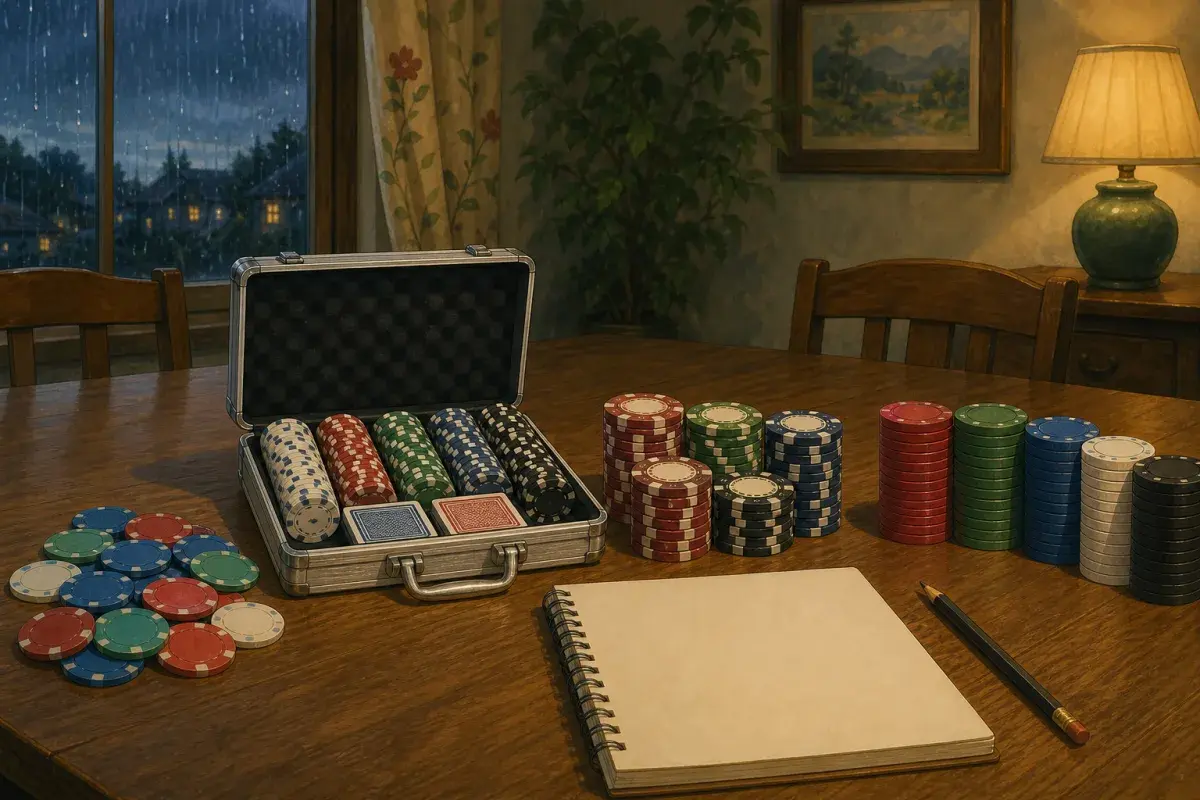
Most people overpay in one of two ways: they either buy premium packaging wrapped around low-grade chips, or they buy a temporary middle-tier set and replace it within a year. This guide breaks down what each price band actually buys you, so you can spend once and get the right set for your game.
Poker Set Price Ranges at a Glance
| Price band (GBP) | Typical product | Best for |
|---|---|---|
| £15–£50 | Entry plastic set (100–500 chips) | Casual or occasional home games |
| £50–£150 | Heavier retail ABS/composite (300–1,000 chips) | Regular home games without customisation |
| £150–£300 | Premium retail / novelty brand sets | Gift buyers and style-led hosts |
| £340–£700+ | Entry-to-mid custom 10g clay or ceramic | Weekly hosts, clubs, long-term setups |
| £700+ | Large club/event builds | Tournaments, commercial use |
These are market-wide planning bands, not fixed prices. A "cheap" set can still be right if you play twice a year. A higher-cost custom set usually makes sense when you host frequently and want consistency.
What Drives Poker Set Cost Most
Price is not only about chip count. Five factors make the biggest difference:
- Chip material and construction — thin plastic costs least; denser casino-grade composites cost more.
- Artwork approach — generic stock designs are cheaper than custom chips with your own values and branding.
- Quantity — per-chip cost typically drops as order size increases.
- Case and accessories — card quality, dealer buttons, racks, and case durability all move the total.
- Manufacturing consistency — tighter tolerances improve stack feel and reduce quality variation, but increase cost.
If your game depends on smooth handling and clear denominations, material and consistency matter more than decorative packaging.
Budget to Mid-Market Sets: What You Usually Get
At £15–£50, you are buying convenience. These sets are useful for learning, parties, and low-stakes casual nights, but chips often feel light and wear quickly.
At £50–£150, you usually get better weight and a fuller kit. This is the most common "value" bracket for home games that run monthly.
At £150–£300, improvements can become cosmetic unless the underlying chip quality truly changes. That is why it helps to compare by material, not just by listed weight or case style.
For many hosts, this is the decision point: stay in retail tiers, or move to a custom set built around your exact game format. The three-rung mental model — mass-market → Poker Foundry sweet spot → collector Paulson — is in casino-grade poker chips: the value sweet spot.
Custom Poker Set Pricing: Where the Market Sits
Custom pricing is usually quoted per chip, then adjusted by quantity, production method, and shipping. At entry quantities, smaller custom orders are typically much higher per chip than high-volume runs, so totals can vary sharply. For worked UK examples at 300–5,000 chips and tier breakpoints, see custom poker chip volume pricing.
At Poker Foundry, current entry points are:
- Custom ceramic poker chips: from £0.73 per chip
- Custom clay poker chips: from £0.79 per chip
Both are casino-grade 10g chips with the same printable face area. The key difference is construction:
- Custom clay chips: printed inlay label, classic bevelled edge, strongest fine-detail artwork fidelity
- Custom ceramic chips: direct-to-chip print, no separate label, higher durability rating and lower minimum quantity
If you want to compare custom against retail without guessing, run side-by-side totals in the instant quote tool, then check sizing with how many poker chips for a home game.
Cost by Use Case: Home Game, Club, or Event
Home game hosts
Most home setups for 6–9 players land around 500–750 chips. For occasional games, mid-market retail may be enough. For weekly games, custom sets often win on long-term value and table experience.
Poker clubs and recurring tournaments
Higher-frequency use usually pushes buyers toward durable custom chips and consistent reorders. Clubs also benefit from custom denominations and branding that reduce confusion across tables.
Corporate events and one-off branded nights
One-off events can justify custom if branding impact matters. If budget is tighter, a decent retail set plus upgraded cards can still deliver a good experience.
Common Cost Mistakes (and How to Avoid Them)
| Mistake | Why it hurts | Better move |
|---|---|---|
| Comparing by chip count only | 500 chips can mean wildly different quality | Compare material, construction, and consistency first |
| Paying for premium case, not chips | Looks good, plays average | Prioritise chip quality, then accessories |
| Buying a stopgap set you outgrow fast | Two purchases in 12 months | If you host weekly, plan long-term from day one |
| Skipping denomination planning | Wrong values sit unused | Match your stakes and player count before buying |
| Ignoring lead times on custom orders | Missed event dates | Start early; build in proof and production time |
Should You Buy Retail or Go Custom?
Retail is usually right when:
- you host a few times a year,
- you are still testing game format and stakes, or
- you need the lowest upfront spend.
Custom is usually right when:
- you host monthly or weekly,
- you want denominations and artwork tailored to your game,
- you care about long-term durability, or
- you are running a club, recurring event, or branded setup.
If you are in the middle, read the custom poker chips buying guide and clay vs ceramic poker chips before deciding.
Bottom Line: A "Good" Poker Set Cost Depends on Frequency
For occasional nights, a £40–£120 retail set can be excellent value. For regular games, many hosts eventually move to a custom casino-grade setup because it solves repeat pain points: handling, clarity, consistency, and durability.
If you want exact numbers for your table size, material, and delivery region, get an instant quote. It is itemised, commitment-free, and shows pricing in your currency for your region.