

How to Clean and Care for Custom Poker Chips (Clay vs Ceramic)
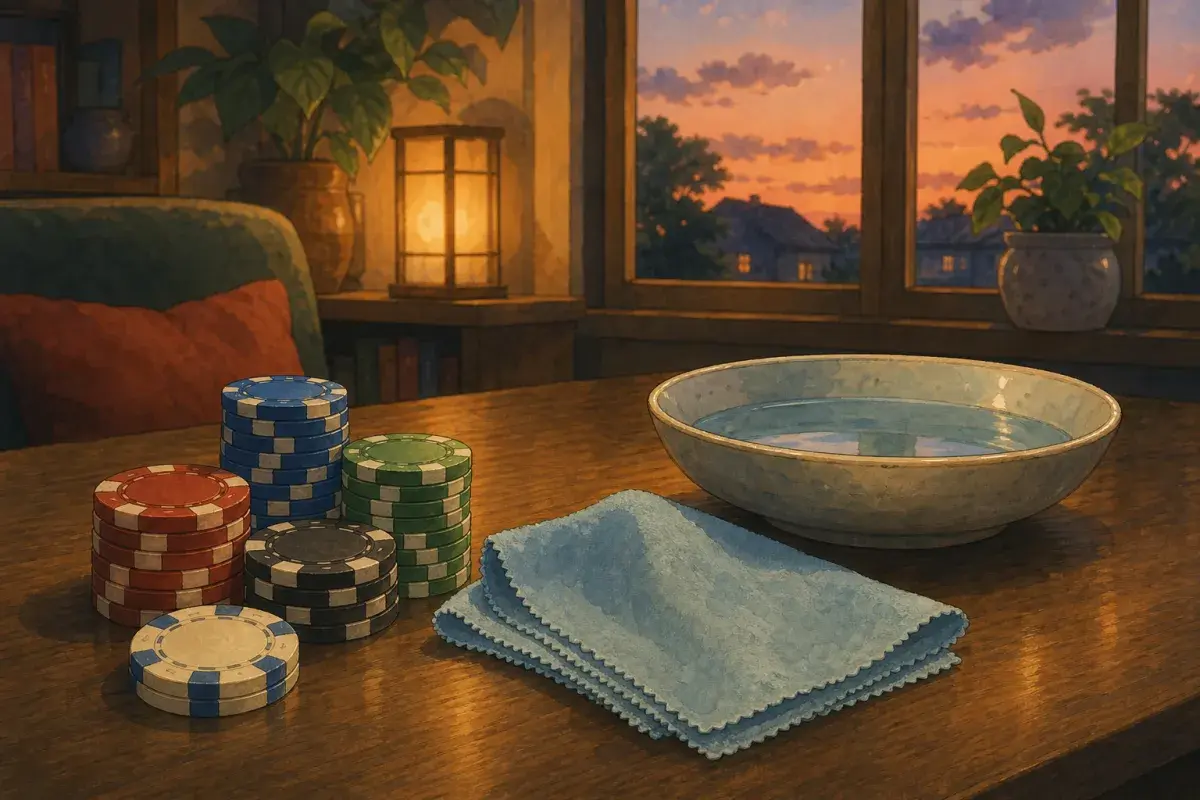
A good custom chip set is built to last thousands of shuffles — but grease, drink splashes, and the wrong cleaning habit can dull the finish, lift an inlay, or leave chips feeling sticky long before they wear out from play. If you have invested in casino-grade clay or ceramic chips, a few minutes of proper care after each session protects both the feel on the felt and the money you spent on the set.
This guide covers routine maintenance, safe deep cleaning, storage, common mistakes, and event-grade habits for clubs — plus the material differences that matter, because clay composite chips and ceramic chips are not cleaned the same way, even when both weigh 10g and look equally professional on the felt.
Why Cleaning Habits Matter More on Premium Chips
Cheap plastic sets can survive almost anything because nobody expects them to last. Custom clay composite and ceramic chips are different:
- Artwork is part of the chip — clay uses a high-resolution printed label inlay; ceramic uses direct-to-chip full-colour printing. Both can be damaged by harsh chemicals, heat, or aggressive scrubbing.
- Texture affects how dirt sticks — clay's slightly porous, textured surface holds hand oils in the moulding grooves. Ceramic's smoother face releases grime more easily but shows surface scratches if you use abrasives.
- Moisture is the hidden enemy — stacking wet chips traps water against edges and artwork. That is when inlays peel, print dulls, and chips develop a heavy, sluggish feel.
The goal is not sterile chips — it is consistent feel, sharp artwork, and predictable stacks. Clean when you need to; store well every time.
Clay vs Ceramic: How Care Differs
Both materials are 10g casino-standard and rated for heavy home-game and club use. The care split comes from how each chip is made, not from weight.
| Care factor | Clay composite | Ceramic composite |
|---|---|---|
| Surface | Textured, slightly porous | Smoother, less oil retention |
| Artwork | Printed label inlay set into the face | Direct-to-chip full-colour print |
| Edge | Classic bevelled edge — grooves collect grime | Flat edge — easier wipe-around |
| Day-to-day effort | Wipe after oily sessions; check inlay edges | Usually a quick damp-cloth pass |
| Deep clean caution | Minimise soak time; never scrub the inlay | Avoid abrasives on printed face |
| Durability (impact cycles) | Rated 25,000+ | Rated 50,000+ |
| Main risk if careless | Inlay lift, edge staining | Surface scratches, print scuffing |
Still deciding which line fits your game? Our clay vs ceramic comparison covers feel, artwork methods, and ordering — this article assumes you already have a set (or are about to order one and want to protect it from day one).
Plastic chips (entry-level sets): Cheap plastic sets tolerate water better but scratch easily and fade fast — you will not see them much in custom orders. If you still play on a retail plastic set, the same gentle rules apply; when you are ready to upgrade, see our guide to moving from plastic to custom chips.
What Never to Do (Any Material)
These rules apply to both clay and ceramic casino-grade chips — and to most composite chips on the market:
- No dishwasher — heat, detergent, and prolonged soaking warp chips and destroy print.
- No bleach, alcohol, acetone, or degreasers — they fade colour and attack adhesives under inlays.
- No hot water, steam, or hair dryers — excess heat can warp composite material.
- No long soaks — a quick dip and wipe is enough; minutes underwater help nobody.
- No steel wool, scouring pads, or heavy magic eraser pressure — micro-scratches show on ceramic; clay texture gets polished unevenly.
- No stacking until fully dry — trapped moisture is the fastest route to sticky stacks and lifted artwork.
When in doubt, less is more. A dry microfibre cloth solves most home-game grime.
Routine Care After Every Session (5 Minutes)
You do not need a full wash after every game. Build this habit instead:
- Brush off crumbs and dust — a soft, dry cloth across the open case or tray.
- Wipe high-touch chips — if players ate at the table or hands were greasy, pass a dry or barely damp microfibre cloth over each colour you used.
- Air the case — leave the lid open for an hour if the room was humid or someone spilled a drink nearby.
- Stack dry only — never repack damp chips into a metal case or tight tray.
For ceramic chips, that is often the entire routine. For clay chips, pay extra attention to bevelled edges where oil collects — a quick wipe around the rim keeps the classic click crisp.
How to Clean Ceramic Poker Chips
Ceramic chips are the lowest-maintenance option for most home games. The direct-print face tolerates gentle wiping better than a separate inlay.
Routine clean (most weeks)
- Lay chips in a single layer on a towel.
- Wipe with a damp microfibre cloth (water only, or one drop of mild dish soap in the cloth — not poured on the chip).
- Follow with a clean damp cloth to remove soap residue.
- Pat dry with a lint-free towel; let air-dry 30 minutes before stacking.
Deep clean (once or twice a year, or when tacky)
- Fill a bowl with lukewarm water and a small squeeze of mild dish soap.
- Submerge a batch of 20–40 chips for 10–20 seconds — swish gently, do not soak the full set for minutes.
- Wipe each chip with a soft cloth; use a soft toothbrush only on the flat edge if grime is lodged — light pressure on the printed face.
- Rinse quickly in clean lukewarm water.
- Pat dry immediately; spread out to air-dry completely.
Avoid ultrasonic cleaners unless you have tested one sacrificial chip first — results vary by manufacturer, and aggressive cycles can stress older print.
How to Clean Clay Composite Poker Chips
Clay chips need more care around the inlay and textured body. The composite material cleans well, but the printed label is the fragile layer.
Routine clean
- Dry-wipe with microfibre to remove surface oil.
- If needed, use a lightly damp cloth on the clay body and bevelled edge — avoid soaking the centre inlay.
- Dry each chip before returning it to the stack.
Deep clean (when edges or grooves feel gritty)
- Bowl of lukewarm water + tiny amount of mild dish soap.
- Work in batches of 20–40 chips.
- Dip briefly — seconds per chip, not a prolonged bath.
- Wipe the moulding and bevel with a soft cloth or soft-bristled toothbrush; use minimal pressure over the inlay.
- Rinse with clean lukewarm water quickly.
- Pat dry at once; lay flat to air-dry — do not stand wet stacks on edge.
Inlay-specific rule: If an inlay edge is already lifting, stop using water on that chip and contact your supplier. Cleaning will not re-bond a failed inlay — it will make it worse.
Our custom clay poker chips use high-resolution printed inlays designed for live play — gentle habits keep them looking sharp through years of home games and club nights.
Drying and Restacking: The Step Most People Skip
Wet chips are worse than dirty chips. Moisture softens adhesives, swells composite material slightly, and makes stacks feel dead on the felt.
- Pat dry every chip with a towel after any water contact.
- Spread chips in a single layer on a dry surface for at least 30–60 minutes in a ventilated room.
- Only then restack by denomination in your case or tray.
- In humid climates, give extra time — or run a dehumidifier in the room where chips are stored.
Storage: Keeping Chips Ready Between Games
Cleaning is half the battle; storage keeps them that way.
| Storage tip | Why it matters |
|---|---|
| Cool, dry place | Humidity attacks cases, foam inserts, and inlay edges |
| Lined case or padded tray | Prevents rim-on-rim scuffing in transit |
| Avoid sustained heavy weight | Don't stack books or gear on a closed metal case for months |
| Separate travel from long-term home storage | Road cases take knocks; give chips a quick wipe when you unpack |
| Metal cases | Our optional metal case packaging (£50 per 500 chips) protects bulk sets — still keep the interior dry |
If chips live in a garage or loft, bring the case indoors before game night so they acclimatise — extreme temperature swings (hot car, freezing shed) stress composite material over time.
Direct sunlight fades custom artwork over months — logos and full-colour ceramic faces lose sharpness if a case sits by a window. Loose boxes let chips slide and scuff each other; a lined case or denomination tray cuts edge wear noticeably.
For UK rooms, travel cases, humidity, and club-scale habits, see our dedicated guide on how to store custom poker chips.
Common Maintenance Mistakes (and Easy Fixes)
Even careful hosts slip up occasionally. These four habits cause most preventable damage:
| Mistake | Why it hurts | Fix |
|---|---|---|
| Over-cleaning | Soap and water wear print faster than normal shuffle wear | Wipe after greasy sessions; deep-clean 1–2× per year only |
| Stacking before dry | Trapped moisture dulls stacks and loosens inlays | Single-layer air-dry 30–60 min after any water contact |
| Mixing materials in one bath | Clay and ceramic dry at different rates; clay inlays are more fragile | Clean clay and ceramic batches separately |
| Shortcut cleaners | Alcohol wipes and household degreasers fade colour and attack adhesives | Mild dish soap + water; dry cloth for light grime |
The pattern is simple: less contact with chemicals and water beats aggressive scrubbing every time.
Advanced Care for Events, Clubs, and High-Volume Use
Back-to-back tournaments and corporate nights put more handling on chips than a weekly home game. A few habits keep sets looking professional through long days:
- Rotate sets if you have multiples — wear spreads more evenly, and you spot damaged chips before a full colour is compromised.
- Inspect edges and faces between events — pull any chip with a lifted inlay or deep face scratch; one bad chip distracts players more than you would expect.
- Gloves during setup and breakdown (optional for branded events) — cuts oil transfer before play starts; one person handles transport so chips stay in labelled cases.
- Deep-clean the week before, not the hour before — stacks must be perfectly dry when the clock starts.
- Denominations labelled in cases — less riffling through mixed trays means less handling. Poker clubs running weekly games benefit most from this; see our poker club ordering guide for set-up context.
Ceramic chips suit high-volume tournament schedules — direct-to-chip print and a flat edge wipe down quickly between sessions. Clay chips reward the same rotation and dry-storage discipline; their inlay just needs gentler deep cleans.
When Not to Clean
Sometimes the best maintenance is leaving chips alone:
- Light fingerprint haze — a dry cloth is enough; soap is unnecessary.
- Lifted or bubbling inlay — clean with a dry cloth only; do not soak.
- Antique or collectible chips — not our product line, but worth saying: many collectors never submerge rare chips at all.
- Right before a tournament — deep-clean the week before, not an hour before — you want perfectly dry stacks on the clock.
Premium chips are rated for tens of thousands of impacts — normal shuffle wear is expected. Cleaning fixes grime and stickiness, not the subtle edge wear that comes from honest play.
Caring for Custom Chips From Poker Foundry
Whether you run a weekly home game or a branded poker club, your chips are a long-term asset — not a disposable plastic set.
- Custom ceramic poker chips — direct-to-chip printing, no separate label, flat edge, 50,000+ impact cycles. Easiest day-to-day wipe-down for high-volume play.
- Custom clay poker chips — bevelled edge, printed inlay, 25,000+ impact cycles, authentic casino click. Reward gentle edge cleaning and dry storage.
Both lines are 10g casino-standard and built for serious play. If you are still choosing a material, read are ceramic or clay poker chips better? for a decision-first FAQ angle — then order with care habits in mind from the first shuffle.
Browse real customer sets on our gallery to see how artwork holds up after live use.
Quick Reference Checklist
Every session
- Dry or damp microfibre wipe if greasy or food nearby
- Case left open briefly if humid
- Chips stacked only when dry
Deep clean (1–2× per year)
- Lukewarm water + mild dish soap only
- Small batches; short contact with water
- Clay: light pressure on inlay; ceramic: no abrasives on face
- Pat dry → single-layer air-dry → restack
Never
- Dishwasher, bleach, alcohol, hot water, long soak, steel wool
Next Steps
Ceramic chips forgive a simple wipe-down routine; clay chips ask you to respect the inlay and bevelled grooves — but both reward the same discipline: mild cleaners, no heat, fully dry before storage.
Planning a new set and want chips that survive years of home-game abuse? Compare materials in our how to choose custom poker chips guide, then price your quantity in under a minute.
Get an instant quote — itemised, commitment-free, with clay and ceramic pricing side by side.