

Custom Poker Chips for Poker Clubs: What to Order and Why
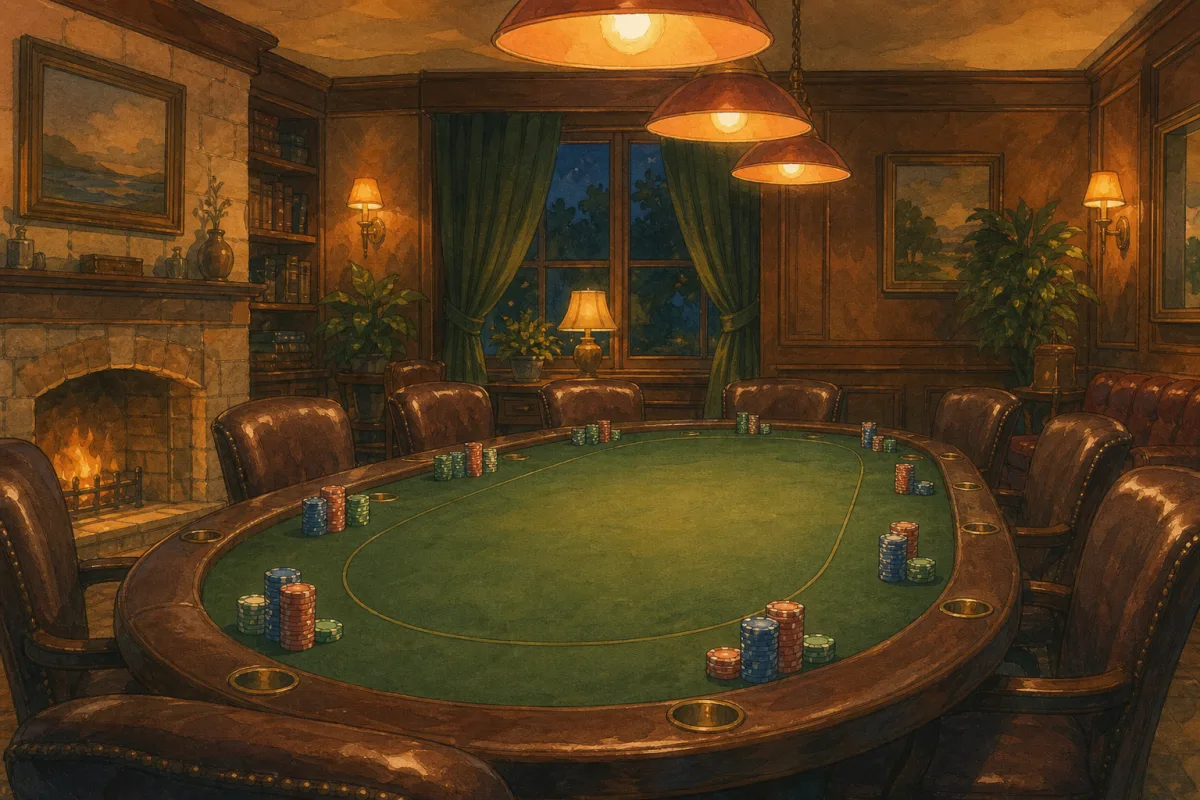
Poker clubs need chips that survive heavy use, prevent counterfeiting, and look the part. Here's how to spec a professional custom set - from material choice to quantity planning.
If you run a poker club - whether it is a weekly home game that outgrew the kitchen table or a commercial card room - generic chips eventually become a liability. For denominations, care, and reorder planning across the whole chip lifecycle, bookmark Poker Chip Academy. University poker societies ordering on committee budgets have their own MOQ and Freshers' timeline - see custom poker chips for university poker societies. A rotating home poker league with shared custody is a different planning job - see custom poker chips for a home poker league before you scale to club quantities here. Pub and bar leagues that move chips weekly between cellar and function room have their own case and count maths - pub poker ordering guide. Players notice when stacks feel wrong. Staff waste time explaining house rules tied to inconsistent denominations. And without a distinctive design, counterfeit chips can find their way onto your tables.
Custom poker chips solve all three problems at once. Here is how to approach an order that makes sense for a club environment.
Why Poker Clubs Upgrade to Custom Chips
Brand identity - Your club logo on every denomination turns the table into a branded experience. Members take pride in the set. Sponsors notice.
Security - A unique chip design is much harder to replicate than mass-market plastic sets ordered from a general retailer. Clubs that need RFID or covert UV can brief us separately - see chip security: RFID and UV.
Consistency - Casino-standard 10g weight and uniform dimensions mean dealers and players build muscle memory. Games run smoother.
Durability - Professional composite chips are rated for tens of thousands of impact cycles. A club running multiple tables weekly will push cheap chips to failure within months.
Clay or Ceramic for a Club?
Both materials work in clubs. The choice depends on what your players value most.
Custom clay poker chips deliver the authentic casino sound and bevelled-edge profile that regular cash-game players expect. If your club culture is rooted in live-room aesthetics - the click on the felt, the way stacks handle - clay is the default choice.
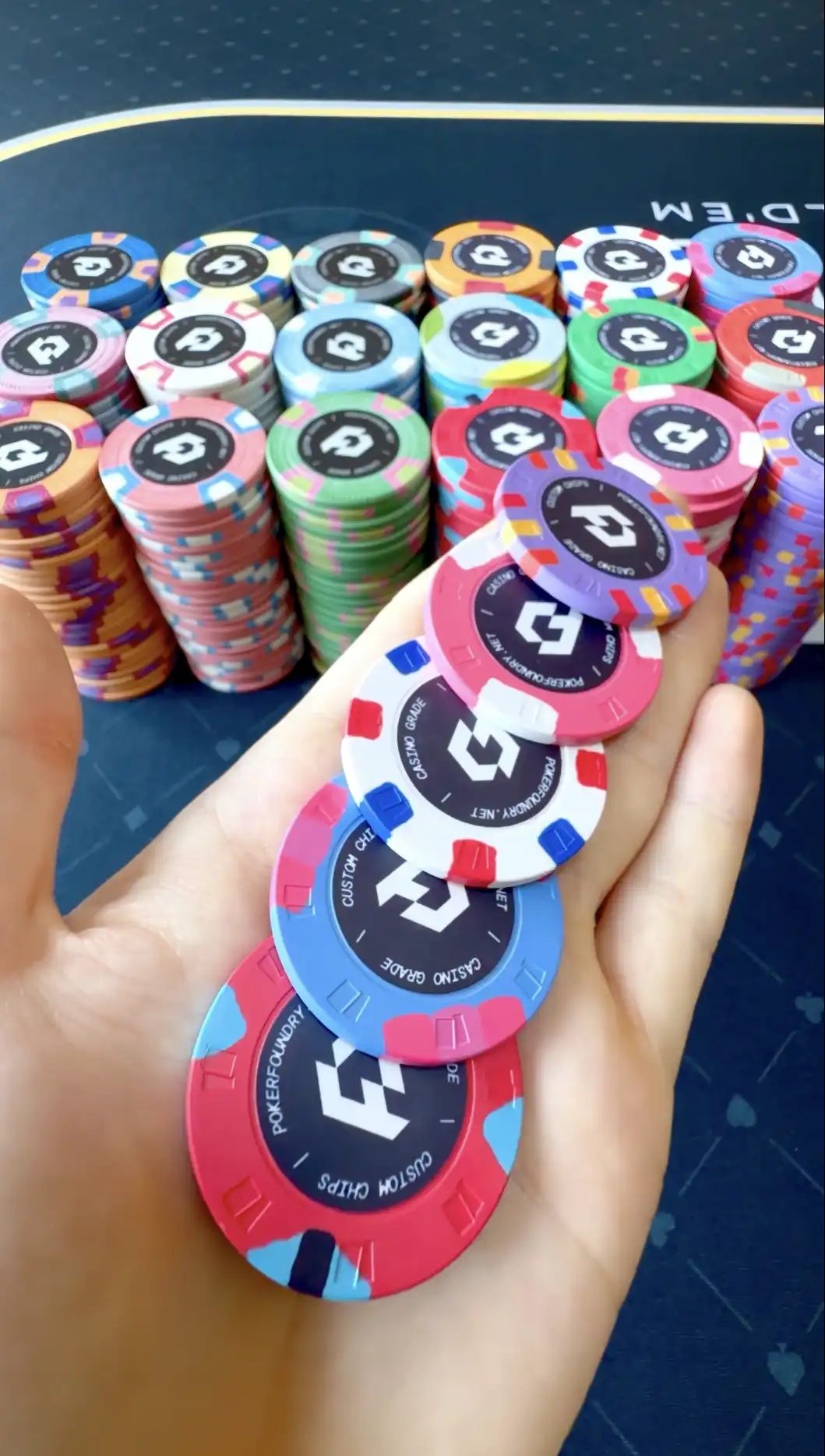
Custom ceramic poker chips offer greater durability (50,000+ impact cycles vs 25,000+ for clay) - no separate paper inlay label - plus and a 300-chip minimum. Clubs running high-volume tournament schedules often lean ceramic.
Compare how each line stacks and shuffles before you spec your order:
Ceramic vs Clay
See & hear ceramic vs clay
Close-up stacking and shuffling — both lines side by side. No voiceover, just sound, motion, and finish.
Press play to hear the stack & shuffle
Not sure? Read our clay vs ceramic comparison or our choosing guide.
Customisation: label artwork on both lines; optional Full Chip Customisation on ceramic for custom body and edge spots per denomination - clay is label inlay only.
Planning Denominations
Most clubs standardise on 5–8 denominations across their chip inventory. A typical cash-game spread might look like:
| Denomination | Typical use |
|---|---|
| 25 / 50 | Small blinds, antes |
| 100 / 200 | Standard betting units |
| 500 / 1,000 | Mid-stakes pots |
| 5,000+ | Deep-stack or high-stakes tables |
Order enough of each denomination to cover your largest expected table count plus a reserve for colour-ups and tournaments. Tournament structures and colour-up timing: poker tournament chip denominations guide.
How Many Chips Does a Club Need?
As a starting point:
- Single-table club (8–9 players): 800–1,200 chips
- Multi-table club (2–4 tables): 2,000–4,000 chips
- Tournament-focused club: 3,000–6,000+ depending on structure
Volume orders reduce the per-chip price. Use the instant quote tool to model different quantities before committing.
Artwork and Branding
Clubs typically need:
- A primary logo chip (often the highest denomination or a dedicated dealer button design)
- Colour-coded denominations matching house rules
- Optional tournament series branding for seasonal events
Supply vector artwork if you have it. If not, mock up ring text and crest placement in the Label Studio - no Illustrator required (design guide) - or ask our design team to build club-ready proofs from your logo file - available via full design service ($136) in the instant quote.
Budgeting for Club Orders
Ceramic chips start from $1.10 per chip (300-chip minimum); clay from $1.14 per chip (500-chip minimum). For a 2,000-chip club order, that sets a clear baseline before volume discounts.
When comparing suppliers, insist on a fully itemised quote covering artwork, setup, production, and shipping. Hidden fees are common in this market.
Lead Times Clubs Should Plan For
- Design approval: ~1 week
- Standard production: ~10 weeks post label sign-off
- Rush freight: ~4 weeks post sign-off (surcharge)
If you're launching a new room or relaunching after a rebrand, start the process at least three months before your target opening date.
Common Club Ordering Mistakes
| Mistake | Why it hurts | Fix |
|---|---|---|
| Under-ordering denominations | Change-making bottlenecks multi-table nights | Plan 5–8 values + reserve |
| Choosing material without player input | Regulars care about feel | Survey cash vs tournament preference |
| Ignoring reorder planning | Expansion needs matching artwork | Store approved files; same supplier - reorder colour matching |
| Late ordering before launch | Misses opening night | ~10 weeks post label sign-off minimum |
The Bottom Line
A poker club's chips are infrastructure, not decoration. Invest in casino-grade weight, a design that's yours alone, and a material that matches how your players actually play.
Get an instant quote for your club order, or browse the gallery to see what's possible. For real club projects, see our WWII aircraft clay case study (500 chips, five RAF aircraft) and RUPS Casino ceramic case study (1,000-chip alumni set).