

Poker Chip Case & Storage Guide: Keep Custom Sets Safe
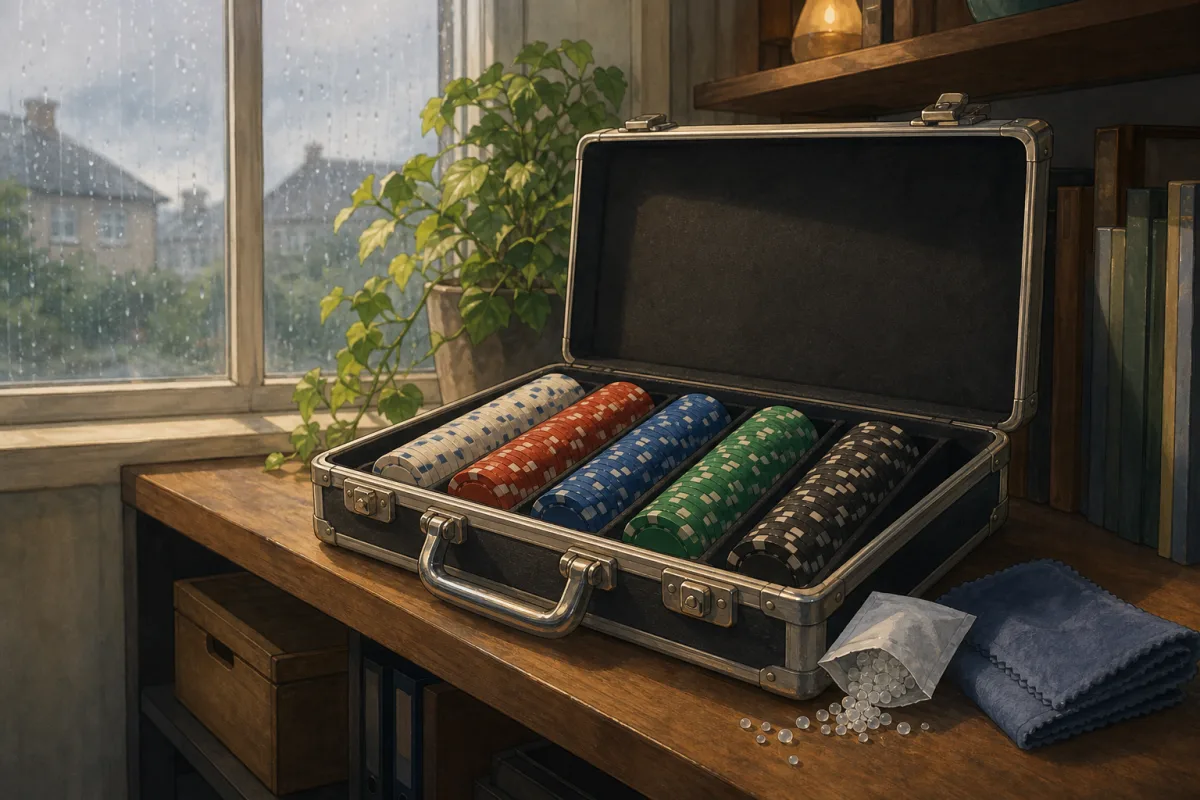
A poker chip case only helps if the room is dry and the chips go in bone dry. Here is how to pick a case, store custom clay and ceramic sets, and travel without scuffs.
You searched for a poker chip case or storage tips because a premium set should not live in a cardboard box. Storage mistakes rarely show on day one; they show up as dull artwork, sticky stacks, or a lifted clay inlay months later. This guide covers case types, climate, travel, and club habits. For open racks on a shelf, see poker chip racks and trays. For display shelves, see the poker chip display case guide.
What Makes a Good Poker Chip Case
Match the case to how often you move the set, not to marketing photos.
| Case type | Best for | Watch-outs |
|---|---|---|
| Lined plastic tray case | Weekly home games in one room | Weak latches; foam wears |
| Hard carrying case (felt/foam) | Travel between houses or pubs | Buy quality hinges; chips must not rattle |
| Metal poker chip case | Bulk sets and clubs | Heavy; still needs a dry room (metal case guide) |
| Open acrylic racks | Display + fast deal-down | Dust, UV, edge contact (racks guide) |
| Cardboard / unlined tin | Temporary only | Scuffs and spills |
Buy checklist: locking or firm latch, denomination trays, lining that does not shed grit, and space for 20–30% bank chips without crushing stacks. Poker Foundry orders include standard protective packaging; a retail poker chip case is a third-party accessory, not a quote line item.
Why Storage Matters as Much as Cleaning
Cleaning removes oils and grime; storage decides whether they come back. Premium 10g clay composite and 10g ceramic chips are built for thousands of shuffles, but they still live in the same environments as your house:
- Hand oils transfer every session - closed cases trap residue if chips were wiped carelessly
- Humidity attacks foam inserts, metal case interiors, and - on clay - the printed inlay edge
- UV light fades full-colour faces over months, especially ceramic direct print
- Impact in transit causes micro-scuffs when chips rattle loose in an unlined box
Think of storage as preserving the investment: a $544+ custom set deserves the same intention as sizing it correctly in the first place (how many chips for a home game).
Climate and humidity: rooms that work (and places to avoid)
Homes in damp or variable climates - from rainy regions to heated dry winters - all punish poor storage. Chips do not need a museum - they need stability.
| Location | Verdict | Why |
|---|---|---|
| Living room cupboard / home office | Best | Stable temperature, low UV if the door stays shut |
| Under-stairs cupboard (heated house) | Good | Dry if ventilated; add silica gel if it smells musty |
| Bedroom wardrobe shelf | Good | Away from radiators and windows |
| Conservatory | Poor | Greenhouse heat and UV fade artwork fast |
| Garage / shed | Avoid long-term | Damp, cold, and heat cycles warp foam and stress composite |
| Loft | Avoid | Summer heat spikes; winter condensation |
| Car boot (months) | Avoid | Extreme temperatures and theft risk |
Rule of thumb: If you would not store a laptop or a leather jacket there, do not store custom poker chips there either.
Humidity: Aim to keep the case micro-environment dry. A $7 pack of silica gel in the case during autumn and spring pays for itself if it prevents one mouldy foam insert or a tacky clay stack. Rechargeable gel packs can be dried in a low oven per manufacturer instructions.
Temperature: 18–22°C with fewer swings beats a perfect average. Bring chips indoors overnight before a game if they lived in a cold garage - stacks feel sluggish until they warm up, and condensation can form when cold chips hit a warm room.
Storage Options: Cases, Trays, and Racks
Not every host needs the same setup. Match storage to how often you move the set and how many chips you own.
| Option | Best for | Pros | Cons |
|---|---|---|---|
| Original retail tin / cardboard | Temporary only | Cheap | No padding; chips scuff and slide |
| Plastic chip case with trays | Home-only weekly games | Organised denominations | Weak latches; foam wears |
| Hard case with foam or felt | Travel between houses / pubs | Impact protection | Takes space; quality varies |
| Metal case (500-chip units) | Bulk custom orders, clubs | Strong shell; source separately after delivery | Heavy; still needs a dry room |
| Open acrylic racks on a shelf | Display + quick access | Easy to admire the set | Dust, UV, and edge contact if overcrowded |
Denomination trays beat a loose dump in a box: chips touch edge to edge less, and setup is faster on game night. If you use open racks, keep them away from windows and do not stack other items on top of tall columns - weight can bell edges over time.
For material choice implications (inlay vs direct print), see clay vs ceramic custom poker chips and product pages for clay and ceramic.
Clay vs Ceramic: Storage Differences
Both lines are 10g casino-grade, but construction changes what storage stress does first.
| Factor | Clay (printed inlay) | Ceramic (direct-to-chip) |
|---|---|---|
| Moisture risk | Higher at inlay edge if chips stored damp | Lower; no separate paper label |
| UV fading | Yes - artwork can dull | Yes - full-face print still fades in sun |
| Edge scuffing | Textured bevelled edge holds oils; needs gentle trays | Smoother face; shows surface scratches if chips rattle loose |
| Stacking when wet | Never - inlay peel risk | Still avoid - stacks seal moisture |
Storage rules are the same for both: dry, dark, stable, padded. Cleaning technique differs - that is why the care pillar splits washing steps by material.
Can I customise body colour and edge spots? On ceramic, add Full Chip Customisation in the quote. Clay customises the inlay only.
Storing Chips Between Home Games
For a weekly home game with one set in the dining room:
- Wipe chips with a dry microfibre cloth after greasy or drink-heavy nights (full clean only when needed).
- Sort back into trays by denomination - less handling next week means less oil transfer.
- Close the case fully so dust does not settle in stacks.
- Keep the case off the floor in rooms prone to damp (ground-floor extensions).
- Rotate which tray sits on top if you notice uneven pressure on bottom chips in a overstuffed case.
If you upgraded from plastic recently, your old tin is fine for spare colour-ups - store custom chips separately so edges do not grind against lightweight plastic in the same compartment (upgrade from plastic guide).
Travel and Club Storage
Pubs, offices, and club venues add knocks, theft risk, and shared storage cupboards.
Travel checklist:
- Hard case with foam or felt - chips should not rattle when you shake the case gently
- Flat carry - backpacks without rigid protection bend stacks
- Lock or strap for valuable sets (insurance photos help if you run a poker club)
- Unpack and rest 15–30 minutes after a cold car before heavy shuffling
- Separate “road case” from “home case” if the travel case gets battered - swap chips back after events
Clubs with multiple sets: Label cases by denomination scheme and rotate sets so one colourway does not take all the wear. Store backup racks indoors, not in a venue’s damp cellar, unless you add desiccants and inspect quarterly.
Common Storage Mistakes (and Easy Fixes)
| Mistake | Why it hurts | Fix |
|---|---|---|
| Closing the case on damp chips | Trapped moisture dulls stacks; clay inlays peel | Air-dry 30–60 minutes after any water contact |
| Window-sill storage | UV fades custom artwork | Cupboard or interior shelf |
| Loose chips in a cardboard box | Edge scuffs and chipped rims | Trays or foam-divided case |
| Years in a hot loft | Expansion cycles stress composite | Move to a heated living space |
| Stacking books on a full metal case | Constant pressure on bottom chips | Store case upright with nothing on top |
| Never opening the case | Mould on foam; unnoticed damage | Air the case quarterly; quick visual check |
When to Replace Cases or Rethink Storage
Replace or upgrade storage when:
- Foam crumbles or smells musty even after drying
- Latches fail - chips spill in transit
- Tray slots are too tight - forcing chips chips edges
- You have outgrown the case after ordering more chips for a larger game
You do not need to reorder chips to fix storage - a better case or desiccant routine often restores peace of mind. If artwork is already faded from sun exposure, storage change stops further damage but may not reverse it; prevention is the win. When fading or moisture damage means chips should leave the table, see when to replace custom poker chips.
Protecting Your Custom Set Long Term
Custom poker chips are a long-term purchase - treat storage like part of ownership, not an afterthought. A dry indoor room, lined case, and dry chips only cover most indoor setups. Add silica gel where damp is real, keep sets out of cars and lofts for months, and link cleaning habits to storage so grease never seals inside a closed lid.
Ready to spec a set? Get an instant quote - itemised pricing in under a minute, no sales call required.