

Mixing Clay and Ceramic Poker Chips: When a Split Order Makes Sense
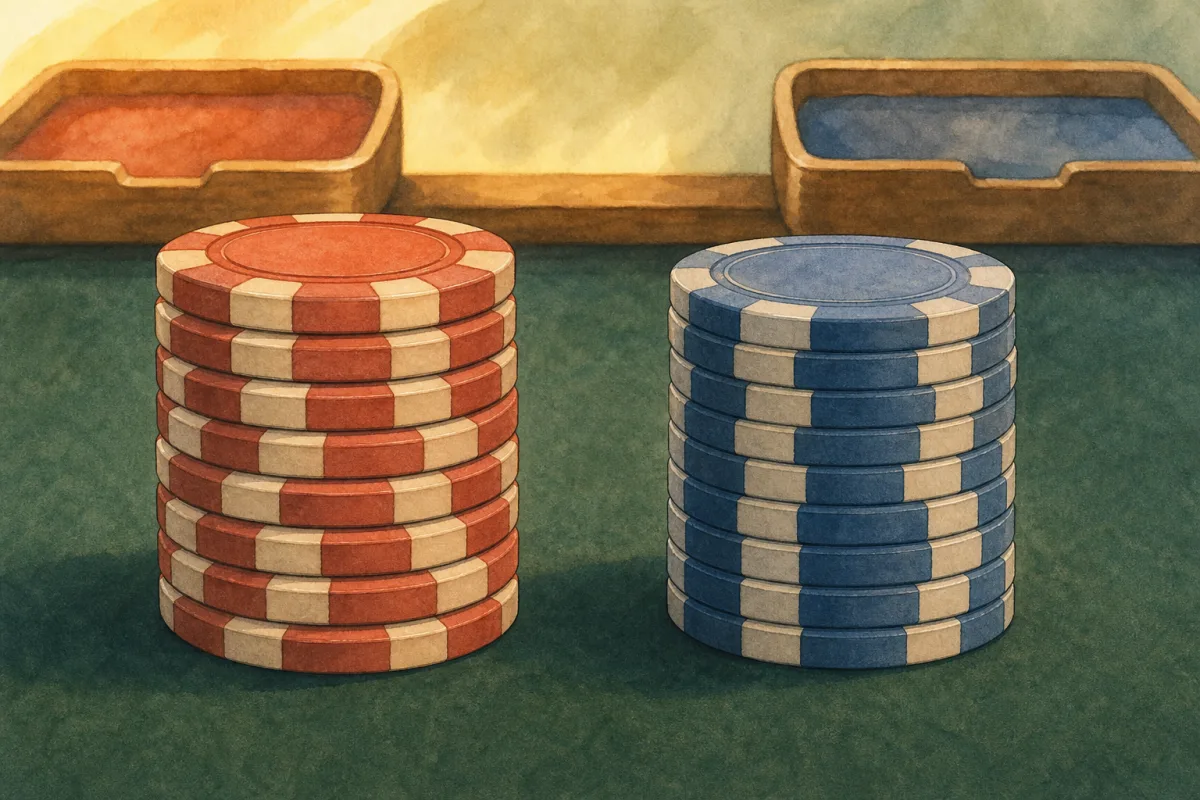
One club orders clay for cash and ceramic for tournaments. Another mixed both on the same table and regretted it. Here is when mixing clay and ceramic poker chips works - and when to pick one line.
If you have not chosen a line yet, start with our clay vs ceramic custom poker chips pillar - this article goes deeper on split orders the comparison guide only summarises in FAQ.
Why anyone mixes at all
| Reason | Typical split |
|---|---|
| Format split | Clay cash ($ on face) + ceramic tournament (unitless 25/100/500) |
| Volume split | 500 ceramic trial tournament bank + 500 clay cash set later |
| Table split | Ceramic on the high-traffic table; clay on second cash game |
| Artwork split | Clay inlay for photo crest; ceramic for bold rebuy colours |
The are ceramic or clay poker chips better guide frames priority - feel vs durability. Mixing is the both answer when budget and MOQ allow.
Material differences that matter at the table
| Clay (inlay) | Ceramic (direct print) | |
|---|---|---|
| Edge | Bevelled | Flat |
| Artwork | Finest detail on label | Durable bonded face |
| Impact rating | 25,000+ cycles | 50,000+ cycles |
| MOQ | 500 | 500 |
| From price | from $1.28/chip | from $1.10/chip |
Print area is the same on both lines - do not choose ceramic expecting bigger logos. Choose it for no separate label and durable direct prints.
Ceramic vs Clay
See & hear ceramic vs clay
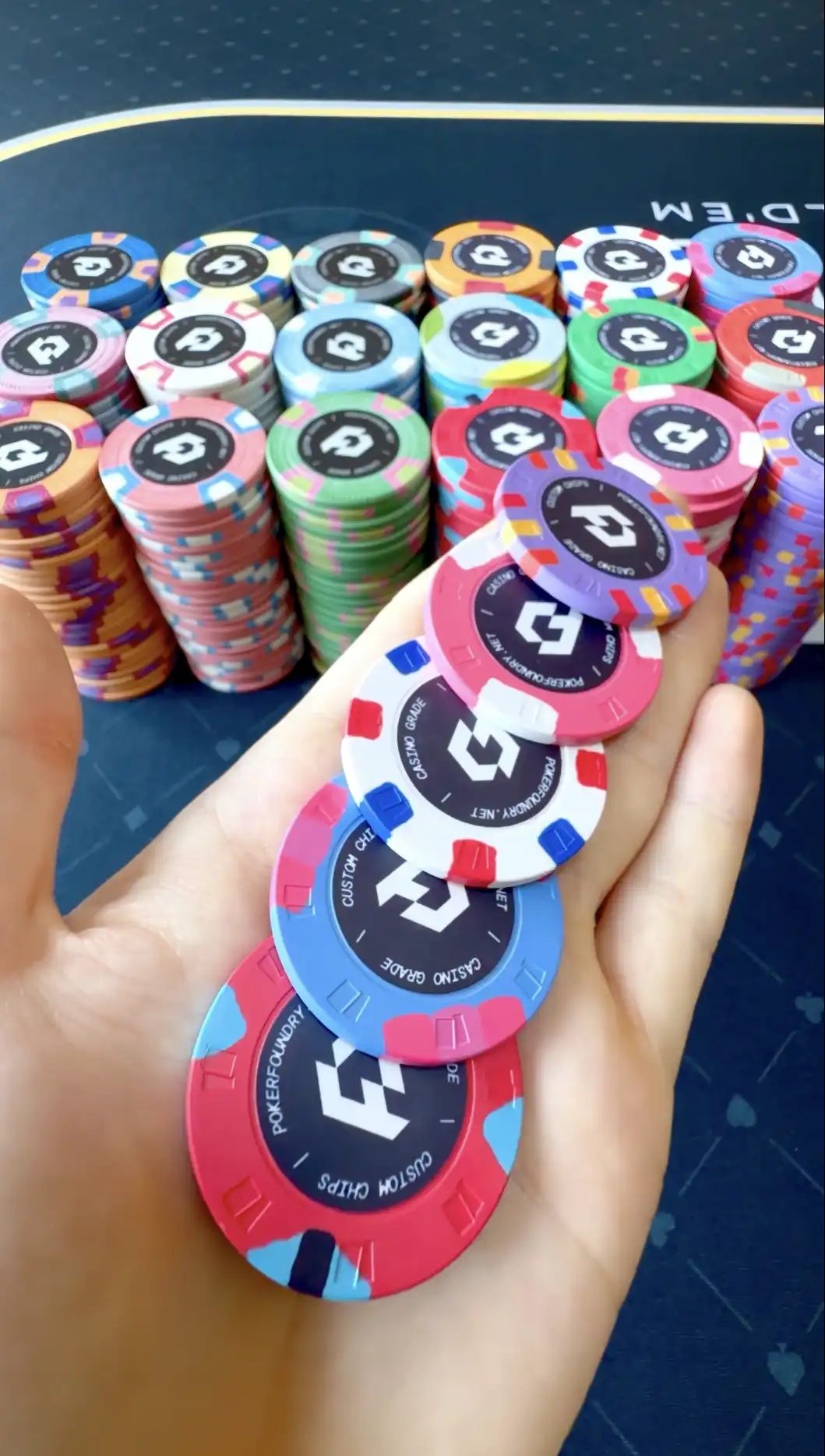
Close-up stacking and shuffling — both lines side by side. No voiceover, just sound, motion, and finish.
Press play to hear the stack & shuffle
Split patterns that work
Cash clay + tournament ceramic (most common)
- Friday cash: clay with $1 / $5 / $25 / $100 on faces - sharpest small type on inlay
- Monthly freezeout: ceramic with 25 / 100 / 500 / 1,000 - unitless, heavy shuffle night after night
- Storage: two cases, two bank trays - never "we will sort them Sunday"
Full dual-format labelling: one set for tournament and cash - if you use one material, that guide still applies; with two materials, format split is physical as well as printed values.
Club two-table expansion
League adds a second table - not always a second full duplicate:
- Table 1 (cash): existing clay set
- Table 2 (tournament): new ceramic ~1,000-chip bank - home poker league sizing
Reorder colour matching matters when you add clay to match year-one ceramic - brief factory with old photos: reorder colour matching.
Trial ceramic, commit clay
Hosts unsure about custom jump from plastic:
- Order 500 ceramic - minimum entry, test artwork and hosting rhythm
- Reorder 500+ clay for main cash once the group commits
- Retire plastic entirely - upgrade from plastic
Split patterns that fail
| Pattern | Problem |
|---|---|
| Both materials in one starting rack | Edge feel and sound mismatch every pot |
| Same body colour, different material | Guests cannot tell $25 clay from 25-point ceramic |
| One case, no dividers | Sorting hell after colour-up |
| Assuming one proof covers both | Separate manufacturing paths - sign off each line |
MOQ and pricing maths on a split order
A split often means two minimums:
| Line | MOQ | Illustrative floor (USD blog) |
|---|---|---|
| Ceramic | 500 | from $1.10/chip |
| Clay | 500 | from $1.28/chip |
300 + 500 = 800 physical chips before you count bank - enough for a modest single-table tournament or a tight cash game, but not both at full depth without a second tranche.
Run both quantities in the instant quote. For volume breaks on a single large ceramic tournament bank, see custom poker chip volume pricing.
Artwork and proofs on mixed orders
Three design paths apply per order - same as any custom job:
- Label Studio - free mockups; attach on quote summary
- Own artwork upload - vector or 300dpi+ PNG
- Full design service - $136 optional; team builds from brief
Clay proofs show inlay placement; ceramic proofs show direct print on stock body colours (custom chip body and edge spot design needs Full Chip Customisation ceramic - edge spots guide). Clay body and edge spots are factory standard - you customise label inlay only.
Care and storage when you own both
Cleaning rules overlap but clay inlay needs gentler handling around artwork:
- Routine: how to clean and care for poker chips
- Storage: how to store custom poker chips - separate cases reduce cross-scuffing bevel on flat
Decision checklist
| Question | If yes → |
|---|---|
| Do you run cash and tournaments monthly? | Consider format split |
| Is one table enough for two years? | Single material simpler |
| Will weekly shuffles exceed 25k impacts on labels? | Ceramic for that set |
| Is crest detail the brand priority? | Clay for that set |
| Can you store two cases? | Required for honest split |
Still torn? Get an instant quote with both lines at your real quantities - side-by-side totals beat guessing from from prices.
Browse gallery sets - many customers show one material per order; clubs sometimes document paired runs across seasons.