

How to Shuffle Poker Chips: Riffle, Wash and Cut Like a Host
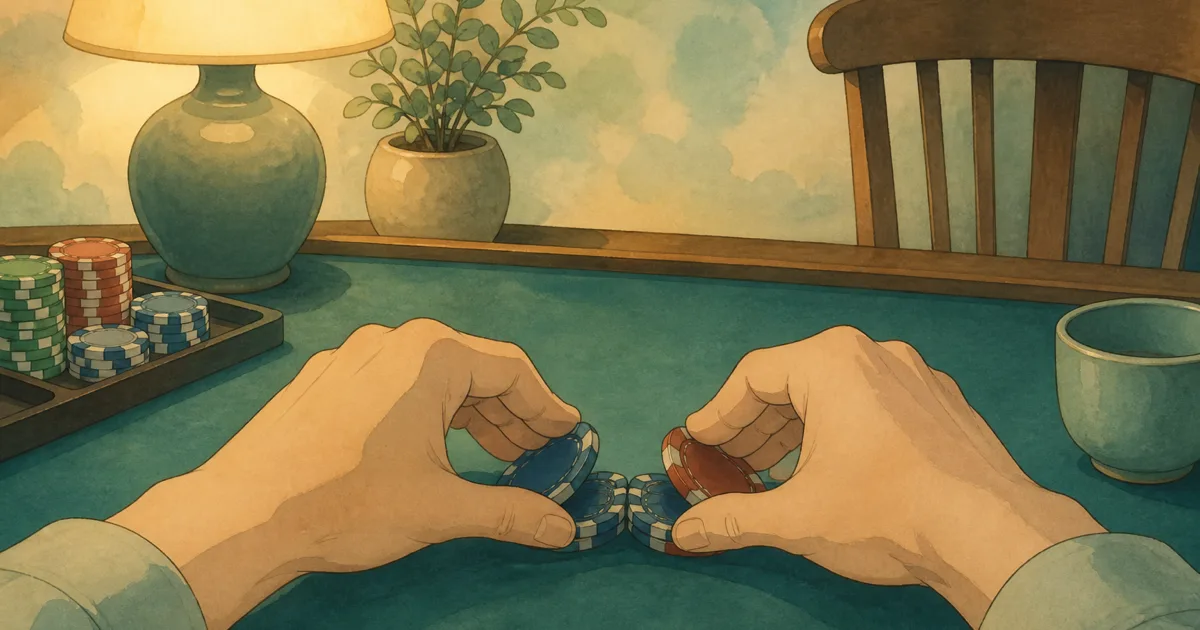
A messy riffle is usually the chips, not your hands. Here is how to shuffle poker chips in a home game so pots stay readable and stacks stay on the felt.
Hosts search this after a humiliating first orbit: a riffle that paints the table, a wash that dings the rail, or a guest who "shuffles" by smashing two bricks together. Good chips make the motions boring. Bad chips make you look clumsy. The clay vs ceramic pillar is about which 10g line to order. This page is the hands-on satellite: how those chips should move once they are on the table.
Counting and colour-ups stay on how to count poker chips. Do not mix the two jobs in one frantic minute before blinds.
Three shuffles, three jobs
| Motion | When to use it | What it is not |
|---|---|---|
| Wash (scramble) | Mixing a denomination after a colour-up or when filling the tray | Not a card wash. Keep chips on felt, not airborne |
| Riffle | Combining two stacks so order is random | Not a chip trick. No bending, no high bridge |
| Cut | Breaking a tall pile for the next player | Not mixing. Cuts preserve most of the order |
Dealers in a card room do all three without thinking because the inventory is built for it: 39mm, about 3mm thick, 10g, edges you can catch. If your set was a tin of ABS, you are fighting physics. Upgrade path: plastic to custom.
How to wash poker chips
- Spread one colour into a loose pancake on the felt, not on wood.
- Using both hands, push groups through each other in small circles. You are stirring, not flipping pancakes.
- Stop when the pile looks random, not when your arms are tired. Twenty seconds is plenty for a home tray.
- Square into stacks of 20 (or 25 if your rack is built that way).
Do not wash mixed denominations together unless you enjoy sorting. Do not wash on a hard table without a pad; you will bruise edges and annoy downstairs neighbours.
How to riffle poker chips
This is the motion people mean by how to shuffle poker chips.
- Take two stacks of 10–15. Thumbs on the near edges, fingers supporting the far side. The chips stay a thin wafer, not a brick in the palm.
- Tilt the stacks so the inner edges meet. You should see a small V, not two towers leaning like fallen books.
- Let chips fall alternately by easing thumb pressure. You are releasing, not flicking.
- When the riffle is in one messy pile, square it. Optional: a low restack. Skip the theatrical bridge until the riffle is clean. A high bridge launches chips.
Clay bevels give many people a catch point. Ceramic flat edges still riffle if the weight is 10g and the diameter is casino-sized. If neither works, the discs are probably metal, acrylic, or underweight plastic. See metal poker chips and acrylic vs clay and ceramic.
Practise over the felt, not over a keyboard. First sessions: slow. Speed comes after the chips stop leaving the table.
How to cut a stack
Hold the stack lightly. Lift half with the thumb and set it down beside or on the remainder, then recombine. A cut is for breaking a pile a player cannot thumb. It is not a substitute for a wash when you need true mix after adding a new colour.
Chip tricks versus table hygiene
Internet clips of chip shuffling tricks are entertainment. At a home game they delay the hand, nick artwork, and train guests to slam your bank. Save tricks for after the last orbit if you must, and if you want to learn the moves properly, our guide to poker chip tricks covers the flourishes and when to keep them off the table. During play, wash, riffle, cut, rack.
If someone wants to show off with your new custom set, remind them the faces are inlay or direct print, rated for play cycles, not floor drops. Care: how to clean and care for poker chips.
Common shuffle mistakes
| Mistake | Why it hurts | Fix |
|---|---|---|
| Riffling full 20s on day one | Sprays, bent wrists | Start with 10–15 |
| Bending chips like cards | Permanent warp | Flat release only |
| Shuffling mixed colours | You just destroyed the bank | One denomination at a time |
| Using metal or plastic discs | Physics will not cooperate | 10g clay or ceramic |
| Counting while you riffle | You will mis-count | Shuffle, then count |
What to order if the shuffle still fails
If you have practised the motions and chips still fly, stop blaming technique.
- Check weight. You want 10g, not a mystery 8g or a 14g puck. Weight comparison.
- Check diameter. 39mm-class discs rack and riffle; oversized coasters do not. Casino specs.
- Check material. Quote ceramic from $1.10/chip (500) or clay from $1.28/chip (500). Mock faces in Label Studio.
Inventory size still comes from the number of players and the structure: how many poker chips for a home game. A perfect riffle on a 200-chip tin will not save an eight-player cash game.
Poker Foundry tie-in
Our clay and ceramic lines are 10g casino-grade so a host can shuffle without a show. We cannot teach a riffle through a screen as well as ten quiet minutes on felt, but we can put the right object in your hands. Itemised totals take under a minute in the quote.
Next steps
Practise wash, riffle, cut on one colour. Then rack twenties.
Ready for chips that stay in the motion? Get an instant quote. Still choosing feel versus durability? Clay vs ceramic poker chips.