

Casino (1995) Poker Scenes: Tangiers Chips and Film Culture
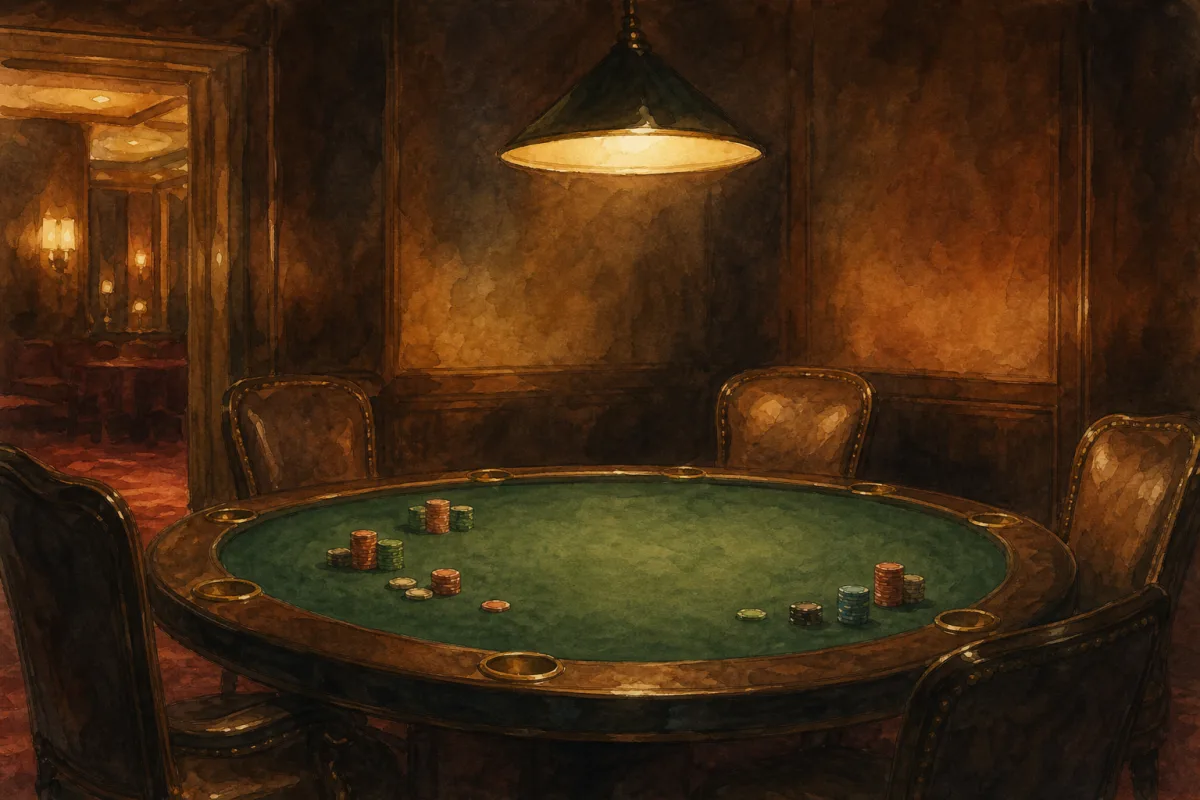
Scorsese's Casino turned the Tangiers floor into myth - plastic prop chips, Sharon Stone scattering stacks, and a generation's image of what a casino night should feel like.
Poker on film is rarely about hand rankings. It is about money made visible - and Scorsese's Casino makes chips the plot. For how real casino-grade chips are manufactured today, see how custom poker chips are made; for the longer arc from ivory discs to modern 10g composite, start with history of poker chips.
Remembering the Tangiers floor
Sam "Ace" Rothstein (De Niro) does not run a home game. He runs a counting room - every chip inventoried, every skim tracked, every high roller filmed from the ceiling. The Tangiers is fiction, but the operational paranoia Pileggi described in his book Casino: Love and Honor in Las Vegas (1995) was drawn from real 1970s–80s Vegas - the Stardust era, mob oversight, and the moment corporate gaming began replacing street money.
That context matters when you watch the table scenes. Dealers do not pause to explain side pots. Cameras care about who holds the tray, not who holds the nuts.
Chips as character - not just props
| Scene type | What chips do |
|---|---|
| Cage and count room | Chips = accountable cash - Ace's genius is math, not charisma |
| High-roller tables | Stacks signal status - the bigger the tray, the bigger the lie |
| Ginger's outbursts | Chips fly - spectacle beats playability |
| Nicky's theft | Foreign chips and miscounts = plot engine |
The film's most memorable chip moment is not a bluff - it is Ginger (Stone) throwing chips into the air in a burst of rage and entitlement. Props departments chose chips that read on 35mm film: high contrast, simple edge spots, stacks that splash when tipped.
Modern film and TV prop buyers face the same problem at higher resolution: chips must read in close-up without looking like toy plastic - a reason some productions commission custom 10g sets instead of rental cages.
What were the Tangiers movie chips?
Collectors on Poker Chip Forum and the Las Vegas Advisor have documented the distinction for years:
| Type | What it is | Movie connection |
|---|---|---|
| Screen-used props | Plastic injection-moulded, hot-stamped Tangiers labels | What actors handled - light, sometimes showing mould marks |
| Brass "Tangiers" souvenirs | ~16g metal-core novelty chips | Inspired by the film - not screen-used; widely sold online |
| Live casino chips (1970s–80s) | Clay-composite cage issue | What real Vegas floors used - heavier, property-specific |
If you buy a "Casino movie chip set" today, check whether you are getting collectible metal or playable composite. Neither is the same as casino-grade custom chips with your artwork and printed denominations - see clay vs ceramic for what modern hosts actually order.
Auction houses including Propstore have sold screen-matched Tangiers chip lots alongside sunglasses, costumes, and cage accessories - proof that prop chips are memorabilia, not inventory you shuffle weekly.
Poker vs table games on screen
Casino is not Rounders. Scorsese is interested in systems - who controls the count, who owns the junket, who gets buried in the desert. Hold'em's 1990s underground revival arrives three years later in Rounders, where chips mean personal debt rather than corporate skim. A decade on, Casino Royale (2006) puts Texas hold'em at the centre of Bond - $10 million buy-in fiction and prop stacks built for HD close-ups.
Still, Casino shaped poker-night aesthetics for hosts who never set foot in a cage:
- Overhead lamps and green felt as moral theatre
- Trays of organised stacks vs chaos on the rail
- The fantasy that every chip has a serial life - true in a Vegas count room, optional in a home game
The card-players-in-art thread
Film is only one branch of card-table culture. Painters fixed the quiet intensity of play long before Scorsese:
- Cézanne's Card Players - rural Provençal men absorbed in a hand
- Caravaggio's Cardsharps - cheating as drama
- Coolidge's Dogs Playing Poker - American fraternity comedy
- David Hockney's A Bigger Card Players - friends at a folding table in 2015
Casino adds Vegas neon to that lineage - chips as empire, not just pastime.
What home hosts take from the film (and what to skip)
| Film image | Home-game reality |
|---|---|
| Infinite cage trays | Size to 700–1,000 chips for 8–9 players - how many chips |
| Plastic prop splash | Order 10g ceramic or clay that survive years of play |
| Unreadable hot-stamp | Print denominations on every face |
| Tangiers branding | Your club name, crest, or league logo - Label Studio mockups are free |
You do not need Scorsese's budget to get table presence. You need weight, readable values, and a design system across colours - the same principles prop masters chase when they brief custom film chips.
Further viewing and reading
- Pileggi, Nicholas - Casino: Love and Honor in Las Vegas (1995) - source material
- Scorsese, Martin - Casino (1995) - Universal / De Laurentiis production
- Card-table art cluster - history of poker chips for material culture beyond Hollywood
Production URLs note
This article is cultural appreciation - not a chip catalogue. If Casino inspired your game room and you want real equipment, browse the gallery or get an instant quote when you are ready to spec a set.