

When to Replace Custom Poker Chips: Signs Your Set Needs an Upgrade
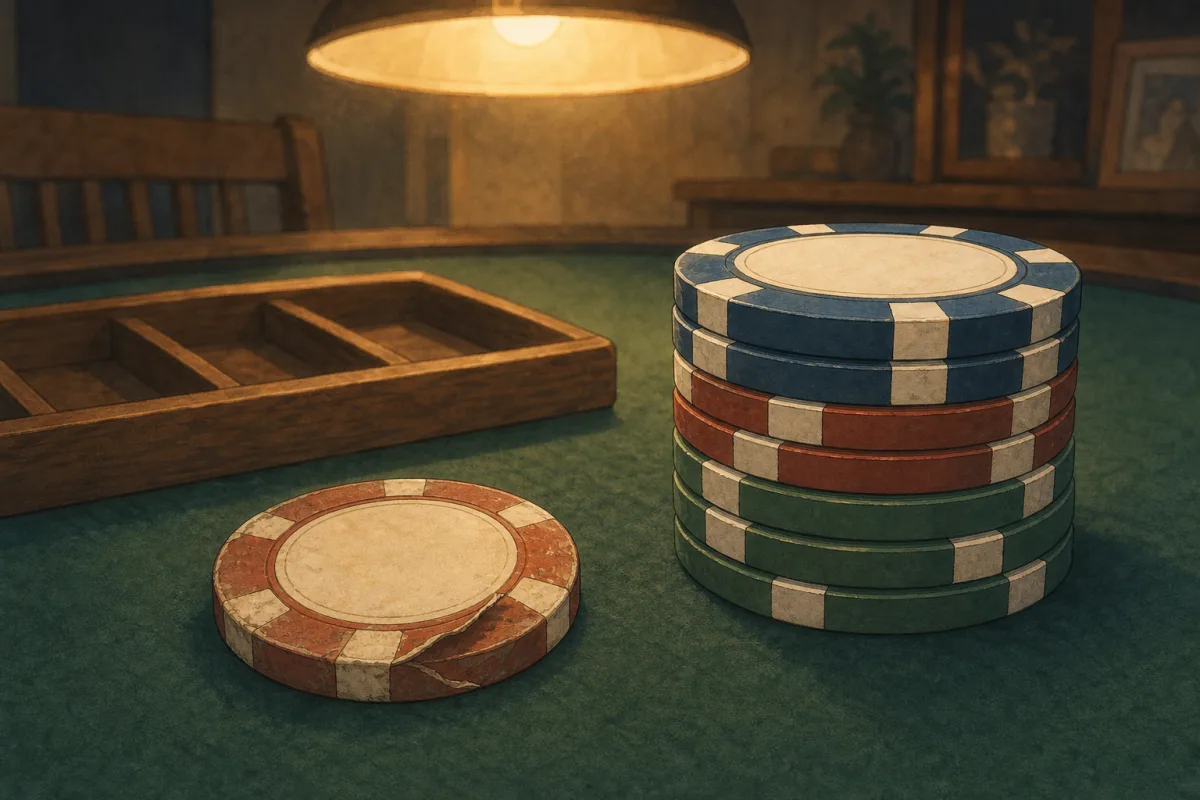
Casino-grade chips are built to last - but lifted inlays, sun-faded artwork, and a wobbly stack are clear signals. Here is when to replace custom poker chips and when a reorder beats buying a whole new set.
You invested in casino-grade chips for how they feel in the hand - not to nurse a shrinking set of damaged denominations. The good news: properly maintained clay composite and ceramic chips are rated for tens of thousands of impacts, so replacement is a years-down-the-line decision for most home games, not an annual chore like casinos face with 24/7 circulation.
This guide covers when wear becomes a problem, material-specific failure signs, partial vs full replacement, and club rotation habits. For day-to-day maintenance, start with our cleaning and care guide for custom poker chips - most sets never reach replacement if storage and cleaning habits are right.
How Long Custom Chips Actually Last
Impact ratings are a better guide than calendar years:
| Material | Construction | Impact rating | Typical home-game lifespan |
|---|---|---|---|
| Clay composite | Printed label inlay, bevelled edge | 25,000+ cycles | Many years of weekly play; inlay edges are the first watch point |
| Ceramic composite | Direct-to-chip print, flat edge | 50,000+ cycles | Often longer functional life; surface scuffs before structural failure |
| Retail plastic | Hollow or stamped | Low | Stickers peel in months; bodies crack - upgrade path, not repair |
A weekly home game puts far less friction on chips than a casino floor running continuous play. Edge texture softens; that is expected character, not a failure. Replacement belongs on the agenda when players cannot trust the stack - illegible values, peeling artwork, or chips that feel wrong in a column.
Seven Signs You Should Replace (or Retire) Chips
Run this check every few months, or the week before a tournament:
| Sign | What it looks like | Action |
|---|---|---|
| Lifted or bubbled inlay | Paper label lifting at the edge on clay chips | Retire immediately - do not soak; plan matched reorder |
| Unreadable denomination | Faded print, deep face scratch, or sun-bleached artwork | Retire from play; replace that colour if several match |
| Warped or cracked body | Chip rocks on the felt; visible crack or permanent bend | Retire - structural failure, not fixable |
| Sticky or tacky feel | Grease ingrained despite proper cleaning | Deep-clean once; if it persists, retire worst offenders |
| Unstable stacks | Columns lean or collapse because edges are wildly uneven | Rotate out the worst chips; reorder if a full colour is mismatched |
| Mixed wear in one colour | Half a denomination looks new, half looks destroyed | Club sets: rotate multiple sets; home games: reorder one colour |
| Security or continuity break | Tournament set missing a full denomination band | Reorder before the next event - do not borrow mismatched values |
One damaged chip is a distraction; ten damaged chips in the same colour is a planning problem.
Clay vs Ceramic: Different Failure Modes
Both lines are 10g casino-standard, but wear shows up in different places because of how artwork is applied. Compare materials in our clay vs ceramic guide if you are still choosing a line.
Clay composite (printed label inlay)
- First failure: Inlay edge - bubbling, lifting, or moisture damage at the bond
- Second: Bevelled grooves hold grime; aggressive cleaning accelerates inlay risk
- Usually fine: Slightly softened bevel edges after years of honest shuffling
- Replace when: Any chip with a loose inlay leaves the table; multiple chips in one value show edge lift
Custom clay poker chips reward gentle cleaning and dry storage - the same habits in our storage guide extend inlay life dramatically.
Ceramic composite (direct-to-chip print)
- First failure: Surface scuffs or print dulling on the chip face from abrasives or long UV exposure
- Second: Flat-edge rim chips from loose transit storage
- Usually fine: Light edge wear; ceramic tolerates handling better than cheap plastic
- Replace when: Face print is unreadable, or rim damage makes stacks unreliable
Ceramic chips suit heavy weekly play - no separate label to peel - but artwork still fades if a case sat in direct sunlight for months.
Customisation recap: default ceramic is label artwork on stock bodies; Full Chip Customisation adds custom body and edge spots per denomination - clay is label inlay only. See clay vs ceramic.
Partial Replacement vs Full Set Upgrade
You rarely need to throw away a healthy set because of a few bad chips.
Partial top-up (matched reorder)
- Best when one or two denominations are worn, lost, or damaged
- Reference your original order so colours and artwork match - see reorder and colour matching
- Minimum orders (500 ceramic, 500 clay) mean you may receive more chips than you strictly need - rotate the worst old chips out of play and keep them as backups
Full set replacement
- Makes sense when most denominations fail the table checks above
- You are upgrading from plastic anyway - replacement is really a material jump; read upgrade from plastic to custom poker chips
- Rebranding (new club logo, new event identity) - matching old colours is harder than a clean-sheet order
- Wrong size ordered originally - fix quantity and denominations together via how many chips for a home game
Repair? Do not try to re-glue inlays or touch up print with markers. Players notice, and it undermines trust in the bank.
What Never to Do With a Failing Chip
| Never | Why |
|---|---|
| Keep playing lifted inlays | Paper can catch and tear further; oils work under the label |
| Soak bubbled clay chips | Water accelerates inlay separation - dry cloth only |
| Mix replacement colours casually | A near-match $25 chip causes more arguments than an obvious blank |
| Assume all wear means replacement | Soft edges on a cared-for set are normal; read the table-check list above |
| Wait until event night | Reorders need 11–12 weeks standard (6 weeks rush) after sign-off - plan ahead |
Club and High-Volume Rotation
Poker clubs burn through chips faster than a nine-player home game:
- Run two or more complete sets if you deal multiple nights - wear spreads evenly and you spot damage early.
- Pull damaged chips the same session - label a small “retired” tray in your case, not the main bank.
- Inspect between events - five minutes saves a disputed pot later.
- Reorder on a schedule - topping up one colour before it is exhausted beats emergency plastic fillers.
Club operators ordering at scale: custom poker chips for poker clubs.
When Plastic Sets Belong in the Bin (Not a Reorder)
If you still run retail plastic with peeling stickers, hollow bodies, or weights that vary chip to chip, replacement means upgrading, not matching a Poker Foundry reorder. Custom chips are a different product category - feel, weight, and artwork durability are the upgrade.
When your existing custom set is mostly healthy, treat plastic as spare whites only if weights are compatible; otherwise retire them so stacks stay honest.
Planning Your Replacement Order
Before you replace anything, decide material, quantity, and timeline:
- Material - Stay on the same line for matched reorders; switching clay ↔ ceramic means a new design sign-off. Still deciding? Are ceramic or clay poker chips better?
- Quantity - Top up the denominations you need; respect minimums and consider future growth.
- Artwork - Reorders use approved files; rebrands need new proofs. Mock layouts in Label Studio if you are refreshing design.
- Lead time - 11–12 weeks door-to-door standard, 6 weeks rush (+$136) after label sign-off. Do not schedule replacement arrival the week of your annual tournament without a buffer.
Price both lines in the instant quote tool - from $1.10/chip (ceramic) and $1.28/chip (clay) at minimum order quantities, plus shipping for your region.
Quick Decision Checklist
Keep playing
- Edges softened but stacks are stable
- All denominations readable at arm’s length
- No lifted inlays or cracked bodies
- Cleaning restored feel after greasy sessions
Reorder matched chips (partial)
- One colour heavily worn but rest of set is sound
- You have order reference or approved artwork on file
- Event is 12+ weeks away (or rush option booked)
Full upgrade
- Most denominations fail the table checks
- You are still on plastic or inconsistent retail weights
- Rebrand or resize makes matching pointless
Next Steps
Custom poker chips are a long-term asset - replacement should be a deliberate decision, not a reaction to one sticky session. Clean and store well (care guide, storage guide), retire chips that fail the table test, and top up with matched reorders when a colour band is done.
Ready to replace worn denominations or spec a full upgrade? Get an instant quote - itemised pricing for clay and ceramic, worldwide delivery, no sales call required.